White water stains on a wooden dining table, often appearing as cloudy rings, can typically be removed using simple DIY methods like the iron technique, mayonnaise, non-gel toothpaste, or baking soda paste. These methods work by either evaporating trapped moisture or displacing it from the wood’s protective finish. Darker stains, however, indicate deeper water penetration and may require professional restoration. This guide provides effective techniques to restore your wooden dining table and offers preventative measures to keep it looking pristine.
Understanding Water Stains on Wood
Before diving into solutions, it’s helpful to understand the type of water stain you’re dealing with, as this dictates the most effective approach. Water stains on wood typically appear in two main forms: white marks and dark or black rings.
White water stains, often presenting as hazy circles or cloudy patches, indicate that moisture has become trapped within the wood’s protective finish layer, such as varnish or lacquer. This surface-level damage is generally easier to treat because the water hasn’t penetrated the wood itself. The white appearance occurs when trapped moisture reflects light differently, creating a cloudy effect.
Dark water stains, ranging from light brown to black, signify a more serious issue. These stains suggest that water has bypassed the protective finish and seeped directly into the wood grain. The darkening is often due to a reaction with the wood’s natural tannins, and these stains are typically more challenging to remove, sometimes requiring more invasive restoration methods.
Essential Preparations Before You Begin
Regardless of the method you choose, a few preparatory steps are crucial to ensure safety and effectiveness.
Clean the Surface
Begin by thoroughly cleaning the affected area of your dining table. Use a soft, dry cloth to remove any dust, crumbs, or debris. For a deeper clean, you can use a slightly damp cloth with a mild wood cleaner, then dry completely. Ensuring the surface is clean prevents rubbing dirt into the wood or interfering with the stain removal process.
Test in an Inconspicuous Area
This is perhaps the most critical step. Always test your chosen DIY method on a small, hidden part of the table, such as the underside or a less visible edge. Different wood finishes can react uniquely to various treatments. A test patch will allow you to gauge the method’s effectiveness and ensure it doesn’t cause discoloration or damage to your table’s finish before applying it to the more prominent stained area.
Effective DIY Methods for White Water Stains
White water stains, caused by moisture trapped in the finish, are often treatable with common household items. Here are some of the most popular and effective DIY methods.
The Iron Method
|
Our Picks for the Best Dining Table in 2026
As an Amazon Associate I earn from qualifying purchases.
|
||
| Num | Product | Action |
|---|---|---|
| 1 | Signature Design by Ashley Bridson 6 Piece Dining Set, Includes Rectangular Dining Table, 4 Ladderback Chairs & Bench, Wood, 36" W x 60.13" D x 30" H, Gray |

|
| 2 | Black Round Dining Table for 6 - Modern Circle 51 Inch Large Room Kitchen Dinning Tables for 4 to 6 Person Seats Small Spaces Wood Dinner Mesa De Comedor Redonda |
|
| 3 | Walker Edison Durango Distressed Solid Wood Dining Table, 72 Inch, Mahogany |
|
| 4 | VECELO 3-Piece 63" Extendable Kitchen Table with Benches/Chairs, Modern Breakfast Dinette/Dining Room Set for 4/6/2, Small Space Saving Design, Easy Assembly |
|
| 5 | Dining Table for 6-8, 63" Large Kitchen Table, Industrial Dining Room Table, Wooden Rectangular Table with Adjustable Feet, for Dinner, Kitchen, Walnut and Black CZ03BH |
|
| 6 | IDEALHOUSE Dining Table Set for 4, Kitchen Table with Upholstered Bench, Rectangular Dining Room Table Set with 2 Benches, 3 Piece Kitchen Table Set for Small Space, Apartment, Studio, Rustic Brown |
|
| 7 | CONSDAN Small Dining Table for 2, Extendable Dining Table, Walnut Veneer and Solid Wood Structure – Space-Saving Design, Ideal for Compact Dining Space and Expands for Larger Dining Areas |
|
| 8 | East West Furniture NFT-BLK-T Norfolk Kitchen Table - a Rectangle Dining Table Top with Butterfly Leaf, 32x54 Inch, Black |
|
| 9 | Signature Design by Ashley Coviar 5 Piece Counter Height Dining Set, Includes Table & 4 Barstools, Brown |
|
| 10 | Winsome Groveland Wooden Square Dining Table |
|
Heat can be surprisingly effective at drawing out trapped moisture that causes white water rings. This method works by gently evaporating the water from beneath the finish.
- Supplies Needed: An iron (empty of water), a clean, dry cotton cloth (like a t-shirt or dish towel), and a microfiber cloth.
- Instructions:
- Ensure your iron is completely empty of water and set to its lowest heat setting (no steam).
- Place the dry cotton cloth directly over the water stain, ensuring it’s free of any patterns or decals that could transfer.
- Gently press the warm iron onto the cloth over the stain for about 5-10 seconds. Keep the iron moving continuously to avoid scorching the wood.
- Lift the iron and cloth to check the stain’s progress.
- Repeat this process in short intervals, checking frequently, until the stain begins to fade or disappear. Avoid prolonged heat in one spot.
- Once the stain is gone, buff the area with a clean microfiber cloth.
“The idea is that iron gently evaporates trapped water in the wood that’s causing the white mark.” – Heath Goldman, Culinary Editor at Food Network
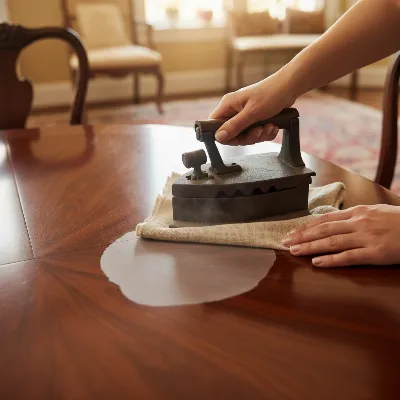 Person using an iron with a cloth to remove a white water stain from a wooden dining table
Mayonnaise or Petroleum Jelly
This seemingly unconventional method is often praised for its ability to tackle white water rings. The oils in mayonnaise or petroleum jelly are believed to slowly penetrate the wood finish, displacing the trapped moisture causing the stain.
- Supplies Needed: Full-fat mayonnaise or petroleum jelly, a paper towel or soft cloth, and a clean microfiber cloth.
- Instructions:
- Apply a generous dollop of full-fat mayonnaise or petroleum jelly directly onto the white water stain. Ensure the stain is fully covered.
- Let it sit for several hours, or ideally, overnight. For mayonnaise, some suggest covering it with plastic wrap to prevent drying out.
- The next morning, wipe away the mayonnaise or petroleum jelly with a clean paper towel or soft cloth.
- Buff the area with a clean microfiber cloth to remove any residue and restore the sheen. If the stain persists, you can repeat the process.
Non-Gel Toothpaste
White, non-gel toothpaste contains mild abrasives that can gently rub away surface-level water stains.
- Supplies Needed: White, non-gel toothpaste, a soft, damp cloth, and a clean, dry cloth.
- Instructions:
- Dab a small amount of white, non-gel toothpaste onto a soft, damp cloth.
- Gently rub the toothpaste onto the water stain using circular motions. Focus only on the stained area to avoid affecting the surrounding finish.
- Continue rubbing for a few seconds to a minute, then wipe off the toothpaste residue with a clean, damp cloth.
- Dry the area thoroughly with a clean, dry cloth. For stubborn stains, you can mix equal parts non-gel toothpaste and baking soda to create a slightly more abrasive paste.
Baking Soda Paste
Baking soda is a natural, mild abrasive that can effectively lift white water stains from wood surfaces without harsh chemicals.
- Supplies Needed: Baking soda, water, a soft cloth, and a clean, damp cloth.
- Instructions:
- Mix one tablespoon of baking soda with a few drops of water to form a thick paste. The consistency should be similar to toothpaste.
- Using a soft cloth, gently rub the paste onto the water stain in circular motions. Avoid excessive pressure.
- Let the paste sit for a few minutes to allow the baking soda to work its magic.
- Wipe off the residue with a clean, damp cloth and dry the area thoroughly with a separate clean cloth. Repeat if the stain persists.
Vinegar and Olive Oil Solution
This classic household combination not only helps break down moisture but also conditions the wood, restoring its natural oils and shine.
- Supplies Needed: White vinegar, olive oil, two soft cloths.
- Instructions:
- Mix equal parts white vinegar and olive oil in a small bowl.
- Dip a soft cloth into the mixture and apply it to the water stain, rubbing gently in the direction of the wood grain.
- Allow the mixture to sit for a few minutes.
- Wipe off the excess with a clean, soft cloth and buff the area to a shine.
Tackling Stubborn or Dark Water Stains
While the DIY methods above are excellent for white, surface-level stains, dark water stains indicate deeper penetration and are significantly harder to remove.
When DIY Might Not Be Enough
Dark or black water stains mean the moisture has gone beyond the finish and into the wood itself, often reacting with the wood’s natural tannins to create a dark discoloration. These stains are challenging for simple DIY fixes because the damage is structural, not just superficial. If initial gentle attempts with the methods for white stains don’t yield results, it might be time to consider more advanced techniques.
Fine Steel Wool and Mineral Spirits (with caution)
For more stubborn white stains that border on slight discoloration, or for very minor dark spots on certain wood finishes, a fine-grade steel wool (0000 grade) with mineral spirits might be an option. However, this method can remove some of the finish and should be used with extreme caution.
- Supplies Needed: 0000-grade steel wool, mineral spirits, clean cloths.
- Instructions:
- Dip a small piece of fine steel wool into mineral spirits.
- Gently rub the stained area in the direction of the wood grain.
- Wipe clean with a cloth and check progress.
- Caution: This method can strip the finish and may require a touch-up or reapplication of finish afterward. It is not recommended for lacquered surfaces, as steel wool can scratch the lacquer and mineral spirits can degrade it.
Sanding and Refinishing (Professional approach)
For truly deep-set or dark water stains, the most effective solution often involves sanding down the affected area (or the entire tabletop) to remove the damaged wood, then staining and refinishing the surface. This is a more aggressive and involved process that requires woodworking skills and appropriate tools. If you’re not experienced with wood refinishing, it’s often best to consult a professional furniture restorer to avoid further damage and achieve the best results. Professionals have the expertise to assess the wood type, finish, and stain depth, providing tailored solutions that DIY methods cannot.
Comparison of DIY Water Stain Removal Methods
Understanding the nuances of each method can help you choose the best approach for your specific water stain.
| Criteria | Iron Method | Mayonnaise/Petroleum Jelly | Non-Gel Toothpaste | Baking Soda Paste | Vinegar & Olive Oil |
|---|---|---|---|---|---|
| Primary Action | Evaporates moisture | Displaces moisture with oils | Mild abrasive action | Mild abrasive & absorbent | Breaks down moisture & conditions |
| Effectiveness | High for white, fresh stains | High for white, surface stains | Good for light, white stains | Good for light to moderate white stains | Moderate for white stains, good for shine |
| Ease of Use | Medium (requires careful heat application) | Easy (simple application, needs long wait time) | Easy | Easy | Easy |
| Materials | Iron, cotton cloth | Mayonnaise/petroleum jelly, paper towel | Non-gel white toothpaste, soft cloth | Baking soda, water, soft cloth | White vinegar, olive oil, soft cloths |
| Time Required | Short intervals (seconds-minutes) | Long (hours to overnight) | Short (seconds-minutes) | Short (minutes) | Short (minutes) |
| Potential Risks | Scorching if not careful | Greasy residue if not fully wiped | Abrasion/dulling if scrubbed too hard/long | Abrasion/dulling if scrubbed too hard/long | Minor residue, strong vinegar smell initially |
| Best For | Fresh or recent white/hazy stains | Stubborn white/cloudy stains | Small, light white marks | General white water rings | White stains, restoring wood luster |
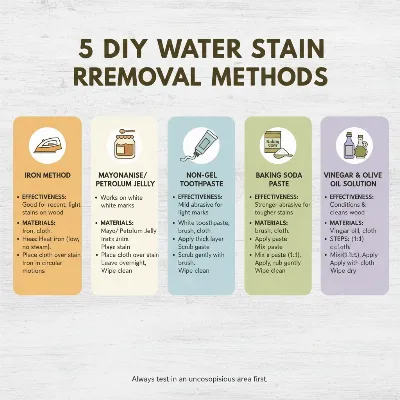 A visual representation comparing different DIY methods for removing water stains from wood furniture
Preventing Future Water Stains
Once your dining table is restored, prevention is key to keeping it looking its best. Implementing these habits can save you a lot of effort in the long run.
Use Coasters and Placemats
This is the golden rule of wooden furniture care. Always place coasters under cold drinks and hot mugs, and use placemats under plates. Coasters create a barrier that prevents condensation or heat from directly contacting the wood finish, eliminating the primary cause of white water rings. Placemats offer similar protection against food spills and heat from dishes.
Wipe Spills Immediately
Accidents happen. If any liquid spills on your wooden table, wipe it up immediately with a soft, absorbent cloth. Do not let spills sit, even for a few minutes, as this increases the chance of moisture penetrating the finish and causing a stain. Blot, rather than rub, to absorb the liquid without spreading it or pushing it deeper into the wood.
Apply Protective Finishes
Consider applying or reapplying a protective finish to your wooden dining table. Options include polyurethane, lacquer, shellac, varnish, or natural oils and waxes. These finishes create a barrier that helps repel water and resist stains. Oiled finishes, like linseed oil, nourish the wood from within, offering a natural, matte look, while varnishes provide a more durable, water-resistant coating. Follow the manufacturer’s instructions for application and reapplication to ensure long-lasting protection.
Maintain Indoor Humidity
Wood is a natural material that reacts to its environment. Extreme fluctuations in humidity can cause wood to expand, contract, or even crack, compromising its finish and making it more susceptible to water damage. Maintaining a consistent indoor humidity level, ideally between 30-50%, can help protect your wooden furniture. Use a humidifier in dry climates and a dehumidifier in humid conditions.
Conclusion
Water stains on your cherished wooden dining table don’t have to be a permanent blight. With a little patience and the right household items, many white, surface-level marks can be successfully removed using DIY methods like the iron technique, mayonnaise, toothpaste, or baking soda paste. Remember to always test your chosen method in an inconspicuous area first and act quickly when spills occur. For more severe or dark stains, professional intervention or a full sanding and refinishing might be necessary. By combining these effective removal techniques with diligent preventive measures like using coasters, wiping spills promptly, and maintaining a protective finish, your wooden dining table can continue to be a beautiful centerpiece in your home for years to come. What’s your go-to method for keeping your wooden furniture pristine?
Frequently Asked Questions
Can I use these DIY methods on all types of wood finishes?
Most DIY methods listed are suitable for common finished wood furniture (varnished, polyurethaned). However, always test on an inconspicuous area first, as different finishes can react differently. Some aggressive methods like steel wool are generally not recommended for lacquered surfaces due to the risk of scratching or dulling the finish.
How do I know if my water stain is white or dark?
White water stains appear as hazy, cloudy, or light-colored rings or spots, indicating moisture trapped in the finish. Dark water stains, which can range from light brown to black, suggest that water has penetrated deeper into the wood itself, reacting with the wood’s natural tannins.
What should I do if a DIY method doesn’t work?
If a DIY method doesn’t work after a few attempts, it’s best to stop and consider professional help, especially for dark or stubborn stains. Over-applying or aggressively rubbing can cause more damage to the wood or its finish. A professional furniture restorer can assess the damage and provide specialized solutions.
How can I make my wooden dining table more resistant to water stains?
To enhance resistance, always use coasters under drinks and placemats for dishes. Wipe up spills immediately. Additionally, consider applying a protective finish like polyurethane, varnish, or wax, which creates a barrier against moisture. Regular reapplication of these finishes, as recommended by the product manufacturer, is crucial for ongoing protection.
Is it safe to use a hair dryer instead of an iron for water stains?
Yes, a hair dryer can be used as an alternative to an iron for removing white water stains. Set it to a low heat setting and move it continuously over the stained area, holding it several inches away from the surface. This method also works by gently evaporating trapped moisture, similar to the iron method, but offers a bit more control over heat distribution.
Frequently Asked Questions
Can I use these DIY methods on all types of wood finishes?
Most DIY methods listed are suitable for common finished wood furniture, such as those with varnish or polyurethane. However, always test on an inconspicuous area first, like the underside of the table, as different finishes can react uniquely. Aggressive methods like steel wool are generally not recommended for lacquered surfaces due to the risk of scratching or dulling.
How do I know if my water stain is white or dark?
White water stains appear as hazy, cloudy, or light-colored rings or spots, indicating moisture trapped within the finish layer. Dark water stains, which can range from light brown to black, suggest that water has penetrated deeper into the wood itself, often reacting with the wood's natural tannins.
What should I do if a DIY method doesn't work?
If a DIY method doesn't work after a few attempts, it's best to stop and consider professional help, especially for dark or stubborn stains. Over-applying or aggressively rubbing can cause more damage to the wood or its finish. A professional furniture restorer can assess the damage and provide specialized solutions tailored to your table's specific needs.
How can I make my wooden dining table more resistant to water stains?
To enhance resistance, always use coasters under drinks and placemats for dishes, and wipe up spills immediately. Additionally, consider applying a protective finish like polyurethane, varnish, or wax, which creates a barrier against moisture. Regular reapplication of these finishes, as recommended by the product manufacturer, is crucial for ongoing protection.
Is it safe to use a hair dryer instead of an iron for water stains?
Yes, a hair dryer can be used as an alternative to an iron for removing white water stains. Set it to a low heat setting and move it continuously over the stained area, holding it several inches away from the surface. This method also works by gently evaporating trapped moisture, similar to the iron method, but offers a bit more control over heat distribution and reduces the risk of scorching.
How to Remove White Water Stains from a Wooden Dining Table
Remove white water stains from your wooden dining table using common household items and simple techniques.
First, clean the stained area thoroughly with a soft, dry cloth to remove debris. Then, always test your chosen DIY method on a small, inconspicuous part of the table, such as the underside, to ensure it doesn't cause discoloration or damage to the finish.
Place a dry cotton cloth over the white water stain. Gently press a warm, water-empty iron (on its lowest setting, no steam) onto the cloth for 5-10 seconds, keeping it moving. Lift and check progress, repeating in short intervals until the stain fades.
Apply a generous dollop of full-fat mayonnaise or petroleum jelly directly onto the white water stain, ensuring it's fully covered. Let it sit for several hours or overnight, then wipe away the residue with a clean paper towel and buff the area with a microfiber cloth.
For toothpaste, dab a small amount onto a damp cloth and gently rub the stain in circular motions for a minute, then wipe clean. For baking soda, mix one tablespoon with a few drops of water to form a paste, rub gently onto the stain with a soft cloth, let sit for a few minutes, then wipe clean and dry.
After removing the stain, buff the area with a clean microfiber cloth to restore its sheen. To prevent future stains, consistently use coasters and placemats, wipe spills immediately, and consider applying a protective finish to your wooden dining table.
Get our weekly buyer guide
Practical specs, not advice. Unsubscribe anytime.

I had a few hazy circles on my cherry wood table that were driving me crazy. I decided to try the non-gel toothpaste method, and it actually made a noticeable difference! It took a bit of gentle rubbing, but the cloudy patches are much less visible now. I’m really happy with the results for such a simple fix.
This guide saved my grandmother’s dining table! We had some pretty prominent white water stains that I thought were permanent. The baking soda paste method was surprisingly effective. It really helped to lift the moisture and restore the finish. I’m so glad I found these preventative measures too, to avoid future issues.
The mayonnaise trick was interesting. It did lighten a few of the white marks on my dining table, but it didn’t completely get rid of the more stubborn ones. I think for really light, fresh stains it’s probably great, but for older, deeper ones, it’s not a miracle worker. Still, worth a try before anything more drastic.
I was so frustrated with a cloudy ring on my antique oak table from a forgotten glass. I tried the iron technique mentioned here and it worked like a charm! I was skeptical at first, but the stain completely disappeared. My table looks brand new again, and I didn’t have to spend a fortune on professional help.