Choosing between a round and a rectangular dining table depends on your room’s shape, desired seating capacity, and social dynamics. Round tables excel in fostering intimacy and are ideal for square or smaller rooms, typically seating 4-6 people. Rectangular tables offer greater versatility for larger gatherings, fitting well in long or narrow rooms and accommodating 6-12+ guests, especially with extensions.
The Enduring Debate: Round vs. Rectangular Dining Tables
At its core, the choice between a round and a rectangular dining table boils down to a blend of practical considerations and personal taste. Both shapes have unique characteristics that influence a room’s functionality, its visual appeal, and the way people interact around it. Your decision will impact everything from guest capacity and conversational flow to traffic patterns and overall room ambiance.
Round Dining Tables: Fostering Connection and Flow
Round dining tables have long been celebrated for their ability to create an intimate and inclusive dining experience. Their circular design inherently promotes conversation, as everyone faces each other without a perceived “head of the table.” This egalitarian arrangement can make guests feel more connected and engaged during meals.
Pros of Round Dining Tables:
- Promote Intimacy and Conversation: The circular shape allows for easy eye contact among all diners, encouraging a more communal and relaxed atmosphere where conversation flows effortlessly.
- Space-Saving for Specific Layouts: Ideal for square-shaped rooms or smaller dining areas, round tables eliminate sharp corners, which can enhance traffic flow and make a room feel more open and less cluttered.
- Child-Friendly Design: The absence of sharp edges makes round tables a safer option for households with young children, reducing the risk of bumps and bruises.
- Softer Aesthetic: Aesthetically, round tables can soften the hard lines often found in modern interiors, introducing an organic, welcoming element to the room.
- Improved Legroom: Many round tables feature a pedestal base, which can offer more legroom and allow for easier movement in and out of seats compared to tables with four legs.
Cons of Round Dining Tables:
- Limited Seating Capacity: While excellent for intimacy, round tables generally seat fewer people than rectangular tables of a similar overall footprint. As they get larger (e.g., over 60 inches in diameter), the distance between diners can actually hinder conversation and make reaching food difficult.
- Less Surface Area: They offer less usable surface area for serving multiple dishes, especially for larger spreads or buffet-style meals.
- Reduced Flexibility: Round tables are typically less versatile when it comes to extension options, and they cannot be pushed flush against a wall like rectangular tables, potentially wasting linear space in narrow rooms.
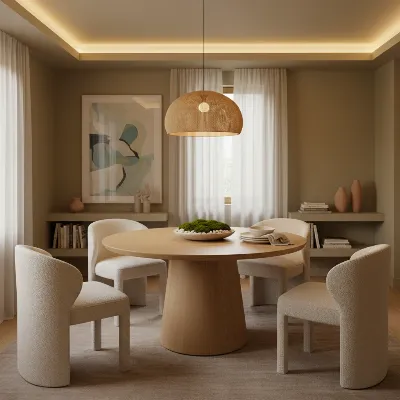 A modern round dining table with a pedestal base, perfectly situated in a cozy, square dining room with soft lighting, emphasizing intimacy.
Rectangular Dining Tables: Versatility and Grandeur
Rectangular dining tables are a classic and enduring choice, renowned for their versatility and ability to accommodate larger groups. Their structured shape lends itself well to formal dining settings and can be a practical solution for maximizing seating in various room configurations.
Pros of Rectangular Dining Tables:
- Ideal for Large Gatherings: With their elongated design, rectangular tables can comfortably seat more people, making them perfect for large families or those who frequently entertain.
- Fit Long or Narrow Rooms: They are a natural fit for rectangular or elongated dining rooms, maximizing available space and complementing the room’s proportions.
- Space Optimization: Rectangular tables can be pushed against a wall when not in full use, freeing up valuable floor space in smaller areas. Many also come with extension leaves, offering flexible seating for varying guest numbers.
- Formal Aesthetic: They often provide a more formal and traditional atmosphere, aligning well with structured interior designs.
- Ample Surface Area: These tables offer significant surface space for multiple serving dishes, centerpieces, and place settings, which is particularly useful for elaborate meals or special occasions.
- Bench Compatibility: Their linear shape pairs well with benches, which can be an efficient seating solution and provide a casual, modern look.
Cons of Rectangular Dining Tables:
- Conversation Challenges: In larger rectangular tables, guests at opposite ends can feel disconnected, making inclusive group conversation more challenging.
- Sharp Corners: The sharp corners can be a safety concern, especially in busy households with young children or high-traffic pathways.
- Less Intimate for Small Groups: For smaller, everyday family meals, a large rectangular table might feel less cozy and intimate compared to a round one.
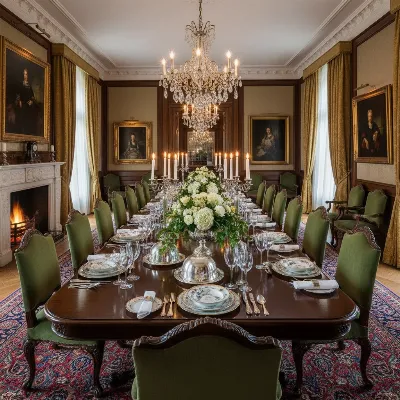 An elegant rectangular dining table, extended for a large gathering in a spacious, elongated dining room with ample serving space.
Optimizing Your Space: Room Shape and Size
The dimensions and layout of your dining area are paramount when deciding on the ideal table shape. A table that is too large or too small for its room can disrupt flow and make the space feel either cramped or cavernous.
Best for Square and Smaller Rooms
|
Our Picks for the Best Dining Table in 2026
As an Amazon Associate I earn from qualifying purchases.
|
||
| Num | Product | Action |
|---|---|---|
| 1 | IDEALHOUSE Dining Table Set for 4, Kitchen Table with Upholstered Bench, Rectangular Dining Room Table Set with 2 Benches, 3 Piece Kitchen Table Set for Small Space, Apartment, Studio, Rustic Brown |

|
| 2 | East West Furniture NFT-BLK-T Norfolk Kitchen Table - a Rectangle Dining Table Top with Butterfly Leaf, 32x54 Inch, Black |
|
| 3 | Walker Edison Durango Distressed Solid Wood Dining Table, 72 Inch, Mahogany |
|
| 4 | CONSDAN Small Dining Table for 2, Extendable Dining Table, Walnut Veneer and Solid Wood Structure – Space-Saving Design, Ideal for Compact Dining Space and Expands for Larger Dining Areas |
|
| 5 | Signature Design by Ashley Bridson 6 Piece Dining Set, Includes Rectangular Dining Table, 4 Ladderback Chairs & Bench, Wood, 36" W x 60.13" D x 30" H, Gray |
|
| 6 | Winsome Groveland Wooden Square Dining Table |
|
| 7 | Signature Design by Ashley Coviar 5 Piece Counter Height Dining Set, Includes Table & 4 Barstools, Brown |
|
| 8 | Black Round Dining Table for 6 - Modern Circle 51 Inch Large Room Kitchen Dinning Tables for 4 to 6 Person Seats Small Spaces Wood Dinner Mesa De Comedor Redonda |
|
| 9 | Dining Table for 6-8, 63" Large Kitchen Table, Industrial Dining Room Table, Wooden Rectangular Table with Adjustable Feet, for Dinner, Kitchen, Walnut and Black CZ03BH |
|
| 10 | VECELO 3-Piece 63" Extendable Kitchen Table with Benches/Chairs, Modern Breakfast Dinette/Dining Room Set for 4/6/2, Small Space Saving Design, Easy Assembly |
|
For those with square dining rooms, breakfast nooks, or multi-functional open-plan living areas, a round table often proves to be the most efficient choice. Its lack of corners allows for smoother movement around the table, creating a sense of openness and maximizing walking space. This can be particularly beneficial in tight or irregularly shaped spaces, where every inch of clearance matters. Round tables visually soften a room and can prevent it from feeling too rigid or angular.
Ideal for Long and Narrow Layouts
Rectangular tables are the undisputed champions for long, narrow dining rooms. Their linear form naturally complements the room’s proportions, allowing for efficient use of wall-to-wall space. Positioning a rectangular table centrally or even against a wall can optimize traffic flow in these challenging layouts. In an open-concept living space, a rectangular table can also act as a subtle divider, defining the dining zone without completely closing it off.
Essential Space and Clearance Guidelines
Regardless of shape, maintaining adequate clearance around your dining table is crucial for comfort and functionality. A general rule of thumb suggests allowing at least 36 inches (approximately 90 cm) of space between the edge of the table and any walls or other furniture. This ensures that chairs can be pulled out comfortably and people can move around the table with ease. For high-traffic pathways, even more clearance might be necessary. Neglecting these guidelines can lead to a cramped, uncomfortable dining experience and impede the natural flow of your home.
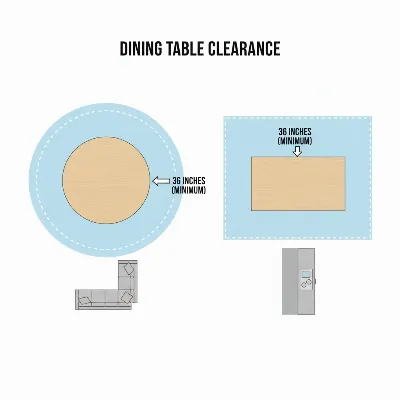 An illustrative infographic showing proper clearance around both round and rectangular dining tables in a room, highlighting minimum recommended distances from walls and other furniture.
Seating Capacity and Social Dynamics
The number of people you typically host and the type of atmosphere you wish to create are critical factors in your table choice. Each shape offers a distinct social dynamic.
Intimacy vs. Accommodation
Round tables are unparalleled when it comes to fostering an intimate atmosphere. For small to medium-sized gatherings (typically 4-6 people), everyone is equidistant, promoting equal participation in conversations. This “no head of the table” dynamic creates a sense of equality and connection. However, for larger groups, a round table can become impractical; a very wide table can make it difficult to hear across or reach shared dishes.
Rectangular tables, conversely, excel at accommodating larger numbers. Their linear design allows for more straightforward seating arrangements, making them ideal for formal dinners or holiday feasts. While they can seat many, the extended length can sometimes lead to segmented conversations, with guests at one end potentially feeling isolated from those at the other.
The “Head of the Table” Effect
The presence or absence of a “head of the table” can significantly influence the social hierarchy and formality of your dining experience. A rectangular table inherently establishes a hierarchical seating arrangement, which can be desirable for formal occasions or specific family dynamics. On the other hand, a round table’s design completely eliminates this concept, promoting a more relaxed, inclusive, and egalitarian atmosphere, perfect for casual family meals or lively discussions among friends.
2026 Trends: What’s Shaping Dining Table Choices?
As we move through 2026, several key trends are influencing dining table designs, reflecting a shift towards more thoughtful, sustainable, and human-centric spaces.
The Resurgence of Organic Shapes
One of the most notable trends is the resurgence of round and organic-shaped dining tables. After years of rectangular dominance, circular designs are gaining popularity for their ability to create inviting, intimate gathering spots. This trend aligns with a broader desire for softer, more natural aesthetics in home decor, moving away from rigid, angular designs. Oval tables, offering a compromise between round intimacy and rectangular capacity, are also seeing renewed interest.
Material Innovation and Sustainability
Sustainability continues to be a driving force in 2026. Dining tables crafted from reclaimed wood, FSC-certified timber, bamboo, and other eco-conscious materials are highly sought after. There’s also a strong emphasis on material sophistication, with natural stone (like travertine and marble) and mixed materials becoming prominent. Expect to see tables combining the warmth of wood with the strength of metal, the lightness of glass, or the luxury of stone, creating visually striking and durable pieces. These material choices reflect a desire for quality, longevity, and a connection to the natural world.
Multifunctional Designs for Modern Living
The modern home often requires furniture that serves multiple purposes. In 2026, multifunctional dining tables, particularly those with expandable features, are trending. These tables offer the flexibility to adapt to varying guest sizes, making them perfect for homes where the dining area might double as a workspace or host impromptu gatherings. This adaptability speaks to a practical approach to design, ensuring furniture works harder and smarter within evolving living spaces.
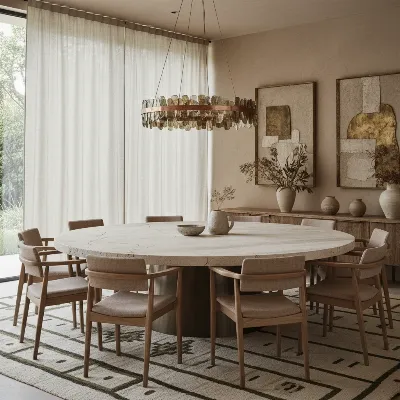 A contemporary dining room showcasing a trendy 2026 dining table, possibly a round table with a natural stone top and mixed material base, in a sophisticated setting.
Beyond Shape: Materials and Maintenance for Longevity
While shape dictates fundamental functionality, the material of your dining table profoundly impacts its aesthetics, durability, and how you care for it. Choosing the right material ensures your investment stands the test of time and fits your lifestyle.
Crafting Your Table: Material Choices
The market offers a rich tapestry of materials, each with unique characteristics that can elevate your dining space.
- Wood Dining Tables: Wood remains a perennial favorite due to its timeless appeal, warmth, and exceptional durability. Options range from rich hardwoods like oak and walnut to lighter, more contemporary finishes. Wood tables offer a sense of tradition and can be incredibly long-lasting with proper care.
- Glass Dining Tables: For a modern and airy aesthetic, glass tops are an excellent choice. They create an illusion of space, making smaller rooms feel larger, and are relatively easy to clean. Tempered glass provides safety and resilience.
- Metal Dining Tables: Often seen in industrial or minimalist designs, metal tables (or tables with metal bases) offer superb durability and a contemporary edge. They are easy to wipe clean and highly resistant to wear and tear.
- Stone Dining Tables: Luxurious materials like marble, granite, or the trending travertine add significant elegance and sophistication. Stone tops are highly durable, heat-resistant, and visually striking, though they can be heavy and require specific care to prevent staining or etching.
Preserving Your Investment: Maintenance Tips
Proper care is essential to ensure your dining table remains a beautiful centerpiece for years to come, regardless of its shape or material.
- For Wood Tables: Avoid direct sunlight and excessive moisture. Use coasters and placemats to prevent heat and water damage. Clean with a soft, damp cloth and specialized wood cleaners. Regular polishing can help maintain its luster and protect the finish.
- For Glass Tables: Wipe down frequently with a microfiber cloth and a glass cleaner to avoid fingerprints and smudges. Be cautious with heavy impacts to prevent chipping or breakage, even with tempered glass.
- For Metal Tables: Generally low maintenance, metal tables can be cleaned with a damp cloth and mild soap. Avoid harsh abrasives that could scratch the finish. For outdoor metal tables, consider rust-preventative treatments.
- For Stone Tables: Use pH-neutral cleaners specifically designed for stone. Wipe spills immediately, as acidic liquids can etch the surface. Regular sealing can help protect porous stones like marble and travertine from stains.
Comparison Table: Round vs. Rectangular Dining Tables
To help you visualize the key differences, here’s a comparative overview:
| Criteria | Round Dining Tables | Rectangular Dining Tables |
|---|---|---|
| Best for Room Shape | Square, smaller, oddly shaped rooms | Long, narrow, large dedicated dining rooms |
| Seating Capacity | Fewer people, intimate (4-6 ideal) | More people, versatile (6-12+ with extensions) |
| Conversation Flow | Excellent, inclusive | Can be challenging at ends |
| Space Efficiency | Good for flow, no sharp corners | Can be pushed against walls, extendable |
| Aesthetic | Soft, casual, modern, inviting | Formal, classic, structured |
| Safety (Corners) | Higher (no sharp corners) | Lower (sharp corners) |
| Flexibility | Limited extension options | Often extendable with leaves |
Making Your Informed Decision
Ultimately, the choice between a round and a rectangular dining table is a deeply personal one, driven by your unique needs, lifestyle, and aesthetic preferences. There is no universally “better” option; only the one that is best suited for you. Consider how you intend to use the table daily, how often you entertain, the dynamics of your household, and the architectural nuances of your dining space.
> “The ideal dining table isn’t just a piece of furniture; it’s an extension of your home’s personality and how you choose to live and connect with others,” says a leading interior designer. “Think beyond trends and focus on what truly resonates with your lifestyle.”
Whether you lean towards the communal warmth of a round table or the expansive versatility of a rectangular design, the right dining table will serve as a cherished focal point for years to come.
Frequently Asked Questions
Which dining table shape is better for small apartments?
For small apartments, round or oval dining tables are often superior as they lack sharp corners, improving traffic flow and making the space feel less cramped. However, a narrow rectangular table pushed against a wall can also be an efficient space-saving solution, especially in long, narrow rooms.
Do round tables genuinely foster better conversation?
Yes, round tables are generally considered better for fostering conversation. The circular arrangement allows all diners to face each other directly, eliminating a “head of the table” and encouraging more inclusive and intimate discussions among everyone present.
What are the main material trends for dining tables in 2026?
In 2026, natural stone like travertine and marble, mixed materials (combining wood, metal, and glass), and sustainable options such as reclaimed wood and FSC-certified timber are highly trending. These materials offer durability, unique aesthetics, and align with eco-conscious design principles.
How much space should I allow around my dining table?
As a general guideline, you should allow at least 36 inches (approximately 90 cm) of clearance between the edge of your dining table and any walls or other furniture. This ensures there is enough room to comfortably pull out chairs and move around the table without obstruction.
Can I use a rectangular table in a square room?
While round tables are often recommended for square rooms to enhance flow, a rectangular table can certainly work in a square room, especially if it’s a larger square space. Ensure there’s ample clearance around all sides, and consider an extendable rectangular table for flexibility.
Get our weekly buyer guide
Practical specs, not advice. Unsubscribe anytime.

This was super helpful in deciding on our new dining table. We host a lot, and the versatility for larger gatherings was a big selling point for us with a rectangular table. We ended up getting one with an extension leaf, and it’s been fantastic for holiday dinners. No regrets!
I always thought rectangular tables were the only option for bigger families, but the point about round tables being ideal for square rooms really resonated with me. Our dining space is pretty much a perfect square, and a round table seating 4-6 people would actually work better than I initially thought. Thanks for the fresh perspective!
We have a long, narrow dining room, and I thought a rectangular table would be perfect, especially for accommodating 6-12 guests. While it does fit the space well, I find that the conversational flow isn’t as good as I’d hoped for larger groups. It’s a bit harder to talk to everyone at once.
I was really torn between a round and a rectangular table for my new apartment. My dining area isn’t huge, and I loved the idea of fostering intimacy during dinners. This helped me confirm that a round table was the way to go. It fits perfectly and makes conversations so much easier with my family.