Painting a wood dining table without sanding is achievable by using specific paints and thorough preparation. This method involves meticulously cleaning and degreasing the surface, selecting specialized paints like chalk or mineral paint, and applying a durable topcoat. This approach allows for a refreshed look without the dust and labor of traditional sanding, making furniture transformation surprisingly easy.
Preparation is Paramount: Thorough Cleaning and Degreasing
Even when skipping the sanding, meticulous preparation remains the cornerstone of any successful painting project. A clean surface is critical for paint adhesion, ensuring your new finish lasts. Begin by removing all hardware from your dining table, such as drawer pulls or decorative accents, to ensure an even coat and prevent paint accumulation.
Next, thoroughly clean the entire table surface. Dust, grime, and grease can prevent paint from adhering properly, leading to peeling or chipping down the line. For a robust clean, a solution of trisodium phosphate (TSP) mixed with warm water is highly effective at dissolving stubborn grease and residue. Alternatively, a simple mixture of equal parts vinegar and warm water in a spray bottle can work wonders for general dirt. For existing glossy finishes, a liquid deglosser can dull the surface, creating a better “grip” for your paint without physical abrasion. Apply your chosen cleaner, wipe the surface thoroughly with a clean cloth, and then rinse with a damp cloth to remove any residue. Allow the table to dry completely before proceeding. Proper drying is non-negotiable; moisture trapped beneath the paint can cause adhesion issues.
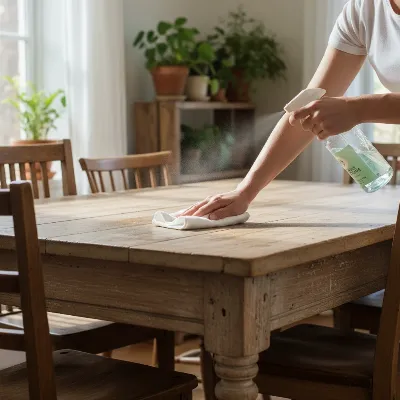 Person cleaning a wood dining table with a spray bottle and cloth, showing a clean, ready surface for painting
Choosing the Right No-Sand Paint and Primer
The secret to painting without sanding lies in selecting the correct products. Not all paints are created equal, and some are specifically formulated to adhere to various surfaces with minimal preparation.
When it comes to paints, chalk paint is often lauded for its exceptional adhesion and ability to stick to almost any surface without sanding or priming. It provides a soft, matte finish that’s very forgiving and can easily be distressed for a vintage look. Mineral paint is another excellent choice, known for its strong bonding properties and a durable, often self-leveling finish, with many varieties containing a built-in topcoat for added convenience. Some brands also offer “all-in-one” furniture paints that include primer and topcoat, streamlining the process significantly. These specialty paints often have low volatile organic compounds (VOCs), making them ideal for indoor use.
For added adhesion and peace of mind, especially on slick or previously sealed wood, a bonding primer is highly recommended. These specialized primers are designed to grip challenging surfaces, creating an ideal base for your chosen paint. Look for primers explicitly stating “no sanding necessary” or that they adhere to glossy surfaces. Shellac-based primers, for instance, are renowned for their superior bonding capabilities and stain-blocking properties. If you opt for a bonding primer, ensure it’s compatible with your chosen paint type.
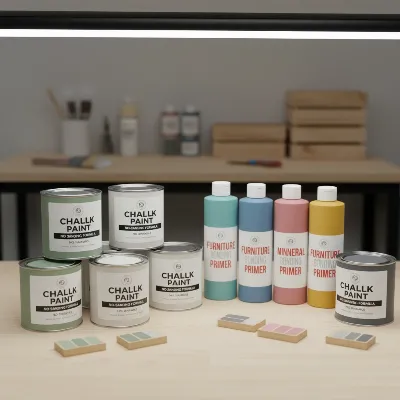 Assortment of chalk paint, mineral paint, and bonding primers suitable for no-sand furniture projects
Step-by-Step Guide to a Smooth, Sand-Free Finish
Once your dining table is spotlessly clean and you have your chosen paint and primer (if using), you’re ready to begin the transformation.
First, mask off any areas you don’t want painted using painter’s tape. This includes table legs if you’re only painting the top, or sections of intricate designs. Lay down drop cloths to protect your floor and surrounding furniture from paint drips.
If you’ve decided to use a bonding primer, apply one or two thin, even coats according to the manufacturer’s instructions. A thin coat is essential for good adhesion and to avoid drips or a textured finish. Allow the primer to dry completely between coats; primer often dries surprisingly fast. For minor imperfections such as small nicks or scratches, apply wood filler, let it dry, and then carefully smooth it level. While this guide focuses on no-sanding, a very light touch with a fine-grit sanding block in just these filled areas can ensure a seamless repair without creating much dust or affecting the overall no-sand approach.
Now, apply your first coat of paint. Whether using a brush, roller, or sprayer, aim for multiple thin coats rather than one thick one. Thin coats dry faster, reduce brush strokes, and build a more durable finish. Use a good quality brush for edges and details, and a small roller for larger flat surfaces to achieve a smoother appearance. If using a sprayer, ensure proper ventilation and follow product-specific thinning instructions.
Allow each coat of paint to dry thoroughly before applying the next. Refer to the paint can for recommended drying times, as these can vary significantly based on paint type, humidity, and temperature. Applying subsequent coats too soon can lead to a sticky finish, peeling, or uneven color.
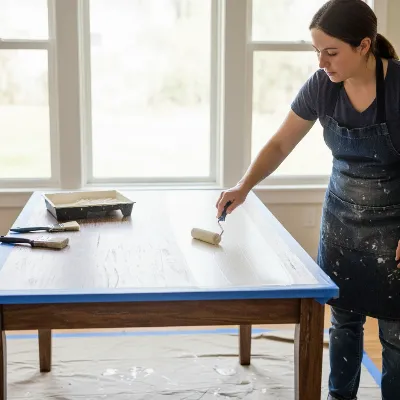 A person applying a thin coat of paint to a wood dining table using a roller, with masking tape visible
Protecting Your Masterpiece: The Importance of a Durable Topcoat
For a dining table, which experiences daily use, spills, and potential knocks, applying a durable topcoat is non-negotiable. This protective layer is vital for safeguarding your painted finish, ensuring it withstands the rigors of everyday life and looks beautiful for years to come.
Water-based polyurethanes (often labeled as polycrylic, polyacrylic, or acrylic resin) are generally the top choice for sealing painted furniture, especially high-traffic pieces like dining tables. They offer excellent durability, resist yellowing over time (unlike oil-based sealers), and are easy to clean up with water. They come in various sheens, from matte to high gloss, allowing you to customize the final look. Apply two to three thin coats of your chosen water-based topcoat, allowing ample drying time between each. For the smoothest finish, some recommend a very light sanding with a super fine grit (220+) foam sanding block between topcoats, but this can be skipped if you prioritize a completely sand-free process and are careful with application.
While furniture wax can be used over chalk paint for a soft, matte finish, it generally offers less protection against moisture and wear than polyurethane. Wax typically requires reapplication every few years and can be more prone to showing water rings or scratches, making it less ideal for a primary dining surface without significant upkeep. If you choose wax, apply it thinly, buffing to a soft sheen, and understand its durability limitations for a dining table.
Beyond dry time, paint and topcoats also require a curing time to reach their full hardness and durability. This period can range from several days to a few weeks, depending on the product. During this time, treat your freshly painted table with extra care, avoiding heavy use, placing hot items directly on the surface, or harsh cleaning.
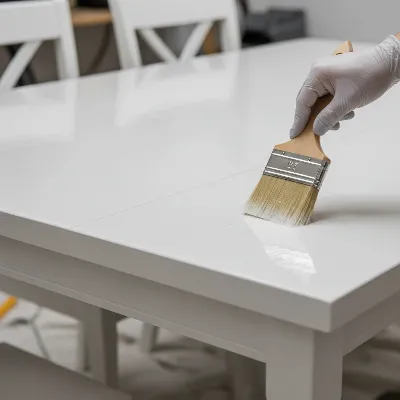 Hand applying a clear topcoat to a freshly painted dining table surface with a brush for durability
Achieving Professional Results: Tips and Tricks
To elevate your no-sand painting project from good to genuinely professional, consider these insights. Investing in quality tools makes a significant difference. High-quality brushes will minimize brush strokes and shedding, while a good foam roller can provide a smooth, even application on flat surfaces. For the fastest, most streak-free finish, a paint sprayer is an invaluable tool, particularly for larger pieces like dining tables, as it lays down a fine, even mist of paint.
When applying paint or primer, work quickly and in sections to maintain a “wet edge.” This technique involves overlapping freshly applied paint with wet paint, preventing visible lines and brush marks that can occur when paint begins to dry. Always strive for even, light pressure rather than heavy, thick strokes.
Ensure you work in a well-ventilated area. This protects your health from paint fumes and aids in faster, more even drying, reducing the chance of drips or dust settling on wet surfaces. Using a box fan to circulate air can be beneficial. After completing your project, clean your tools immediately with warm soapy water (for water-based products) to keep them in good condition for future projects.
Common Pitfalls to Avoid
Even with the convenience of no-sanding methods, certain missteps can compromise your results. The most common mistake is skipping thorough cleaning. Any residual grease, dirt, or polish will prevent paint from adhering, leading to a finish that peels or flakes. Remember, proper cleaning is your foundation.
Another frequent error is applying coats that are too thick. This not only increases drying time but also heightens the risk of drips, runs, and an uneven, textured finish. Patience is key; thin coats build up a much stronger, smoother, and more professional-looking surface.
Insufficient drying and curing time between coats and before full use is another pitfall. The paint may feel dry to the touch, but it needs time to fully harden and bond. Rushing this process can lead to dents, scratches, and damage to your fresh finish. Always follow the manufacturer’s recommendations.
Finally, avoid using the wrong types of paint or topcoats. Standard wall paints or craft acrylics are not formulated for the durability required for furniture, especially a dining table. Similarly, using an oil-based topcoat over a light-colored paint can result in an undesirable yellowing over time, altering your intended color. Stick to products specifically designed for furniture and ensure compatibility between your primer, paint, and topcoat.
Conclusion
Transforming your wood dining table without the arduous task of sanding is entirely achievable with the right preparation, products, and techniques. By prioritizing a thorough cleaning, selecting appropriate no-sand paints and bonding primers, and meticulously applying multiple thin coats, you can achieve a durable and beautiful finish. Always remember to seal your table with a high-quality water-based polyurethane to protect it from the demands of daily use, allowing for proper drying and curing times. Embrace this user-friendly approach, and you’ll find that updating your furniture can be an enjoyable, mess-free experience, leaving you with a stunning centerpiece for your dining room. What neglected pieces in your home are next on your list for a no-sand makeover?
Frequently Asked Questions
What type of paint is best for painting wood furniture without sanding?
|
Our Picks for the Best Dining Table in 2026
As an Amazon Associate I earn from qualifying purchases.
|
||
| Num | Product | Action |
|---|---|---|
| 1 | VECELO 3-Piece 63" Extendable Kitchen Table with Benches/Chairs, Modern Breakfast Dinette/Dining Room Set for 4/6/2, Small Space Saving Design, Easy Assembly |

|
| 2 | Winsome Groveland Wooden Square Dining Table |
|
| 3 | CONSDAN Small Dining Table for 2, Extendable Dining Table, Walnut Veneer and Solid Wood Structure – Space-Saving Design, Ideal for Compact Dining Space and Expands for Larger Dining Areas |
|
| 4 | IDEALHOUSE Dining Table Set for 4, Kitchen Table with Upholstered Bench, Rectangular Dining Room Table Set with 2 Benches, 3 Piece Kitchen Table Set for Small Space, Apartment, Studio, Rustic Brown |
|
| 5 | Dining Table for 6-8, 63" Large Kitchen Table, Industrial Dining Room Table, Wooden Rectangular Table with Adjustable Feet, for Dinner, Kitchen, Walnut and Black CZ03BH |
|
| 6 | Black Round Dining Table for 6 - Modern Circle 51 Inch Large Room Kitchen Dinning Tables for 4 to 6 Person Seats Small Spaces Wood Dinner Mesa De Comedor Redonda |
|
| 7 | Signature Design by Ashley Bridson 6 Piece Dining Set, Includes Rectangular Dining Table, 4 Ladderback Chairs & Bench, Wood, 36" W x 60.13" D x 30" H, Gray |
|
| 8 | Signature Design by Ashley Coviar 5 Piece Counter Height Dining Set, Includes Table & 4 Barstools, Brown |
|
| 9 | East West Furniture NFT-BLK-T Norfolk Kitchen Table - a Rectangle Dining Table Top with Butterfly Leaf, 32x54 Inch, Black |
|
| 10 | Walker Edison Durango Distressed Solid Wood Dining Table, 72 Inch, Mahogany |
|
Chalk paint, mineral paint, and all-in-one furniture paints (which include built-in primer and topcoat) are excellent choices for painting wood furniture without sanding. They are formulated for superior adhesion to various surfaces with minimal preparation.
Do I need to use a primer if I’m not sanding my dining table?
While some specialty paints (like certain chalk paints or all-in-one paints) claim to eliminate the need for primer, using a high-quality bonding primer is highly recommended, especially for glossy or slick surfaces. It provides an optimal base for paint adhesion and durability.
How do I prepare a glossy wood dining table surface for painting without sanding?
Thoroughly clean the table with a degreaser like TSP or a dedicated liquid deglosser. This removes grime and dulls the existing finish, creating a surface the paint can adhere to without the need for abrasive sanding.
How many coats of paint will I need for a no-sand project?
Typically, you will need two to three thin coats of paint to achieve full coverage and a durable finish. Applying multiple thin coats is always better than one thick coat, as it reduces drips, brush marks, and improves overall adhesion and longevity.
How long does the paint need to dry and cure before using the dining table?
Paint usually dries to the touch within a few hours, but it requires much longer to fully cure, which means hardening to its maximum durability. Drying times between coats are usually a few hours, while full curing can take several days to a few weeks. Always refer to the specific paint and topcoat manufacturer’s instructions for accurate times.
Can I use wax to protect a painted dining table?
While wax can be used over chalk paint for a soft, matte finish, it generally offers less durable protection than a water-based polyurethane topcoat, especially for high-traffic surfaces like a dining table. Wax may require periodic reapplication and is more susceptible to water rings and scratches.
Frequently Asked Questions
What type of paint is best for painting wood furniture without sanding?
Chalk paint, mineral paint, and all-in-one furniture paints are excellent choices for painting wood furniture without sanding. These paints are specifically formulated for superior adhesion to various surfaces with minimal preparation, often including built-in primer and topcoat.
Do I need to use a primer if I'm not sanding my dining table?
While some specialty paints, such as certain chalk paints or all-in-one paints, claim to eliminate the need for primer, using a high-quality bonding primer is highly recommended. A bonding primer provides an optimal base for paint adhesion and significantly enhances durability, especially on glossy or slick surfaces.
How do I prepare a glossy wood dining table surface for painting without sanding?
To prepare a glossy wood dining table surface without sanding, thoroughly clean it with a degreaser like trisodium phosphate (TSP) or a dedicated liquid deglosser. This process effectively removes grime and dulls the existing finish, creating a surface that paint can adhere to properly.
How many coats of paint will I need for a no-sand project?
For a no-sand painting project, you will typically need two to three thin coats of paint to achieve full coverage and a durable finish. Applying multiple thin coats is always preferred over one thick coat, as it reduces drips, minimizes brush marks, and improves overall adhesion and longevity of the paint.
How long does the paint need to dry and cure before using the dining table?
Paint usually dries to the touch within a few hours, but it requires much longer to fully cure, which means hardening to its maximum durability. Drying times between coats are typically a few hours, while full curing can take several days to a few weeks. Always refer to the specific paint and topcoat manufacturer's instructions for accurate times.
Can I use wax to protect a painted dining table?
While wax can be used over chalk paint for a soft, matte finish, it generally offers less durable protection than a water-based polyurethane topcoat, especially for high-traffic surfaces like a dining table. Wax may require periodic reapplication every few years and is more susceptible to water rings and scratches compared to polyurethane.
Paint a Wood Dining Table Without Sanding
Transform your wood dining table with a fresh coat of paint without the need for traditional sanding, using specialized products and techniques for a durable finish.
Thoroughly clean the entire dining table surface to remove dust, grime, and grease. Use a solution of trisodium phosphate (TSP) or a liquid deglosser for stubborn residues, then rinse and allow to dry completely. This step is crucial for paint adhesion.
If using, apply one to two thin, even coats of a bonding primer, especially on slick or previously sealed wood. Allow the primer to dry completely between coats according to manufacturer instructions. This creates an ideal base for your chosen paint.
Apply your chosen no-sand paint (e.g., chalk paint, mineral paint) in multiple thin coats rather than one thick one. Use a quality brush for edges and a roller for flat surfaces, allowing each coat to dry thoroughly before applying the next. This minimizes brush strokes and builds a durable finish.
For a dining table, apply two to three thin coats of a water-based polyurethane topcoat for protection. This layer safeguards your painted finish against daily wear and tear. Allow ample drying time between coats and for full curing.
Beyond dry time, paint and topcoats require a curing period, which can range from several days to a few weeks, to reach full hardness. Treat your freshly painted table with extra care during this time, avoiding heavy use or harsh cleaning.
Get our weekly buyer guide
Practical specs, not advice. Unsubscribe anytime.

I followed the steps for using chalk paint on my dining table. While it did adhere without sanding, I found that the finish wasn’t as smooth as I’d hoped, even with a good topcoat. It’s definitely an improvement over the old look, but I think for a really professional finish, a light sand might still be necessary. Good for a quick fix though.
I was so skeptical about painting my old dining table without sanding, but this method really works! The tip about thorough cleaning and degreasing made all the difference. My table looks brand new, and I didn’t have to deal with any of the dust or mess. Highly recommend giving this a try if you’re looking for a quick refresh.
This guide was a lifesaver! I used mineral paint on my dining table, and the application was surprisingly easy. The part about removing all hardware before cleaning was a smart move I wouldn’t have thought of on my own. It saved me a lot of hassle and made sure the paint went on evenly. Very happy with the updated look.
I’ve been wanting to update my dining room table for ages but dreaded the sanding process. This method using specialized paints was exactly what I needed. The transformation was surprisingly easy, and the durable topcoat has held up really well to daily use. My family loves the new look!