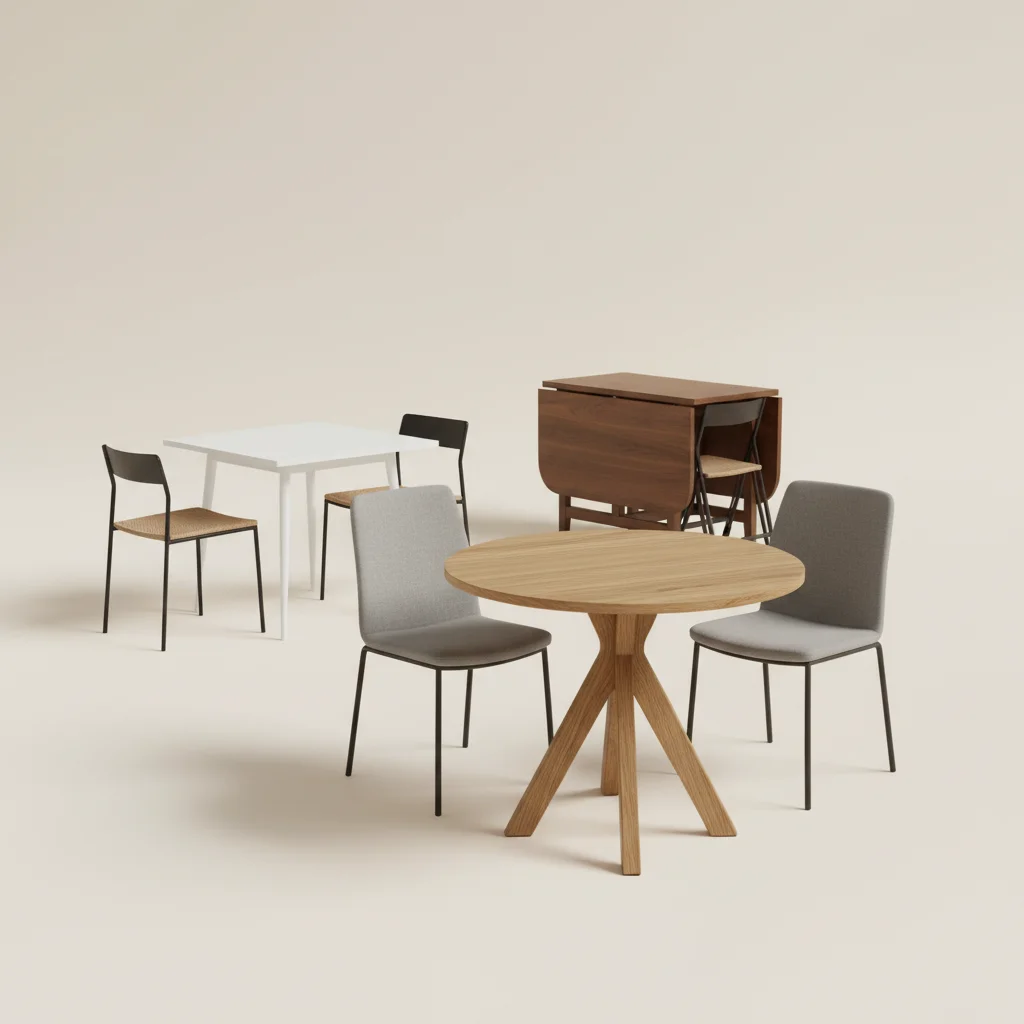
Choosing the right dining table for a small space can be a challenge, but certain shapes are undeniably more efficient than others. For maximizing both seating and maneuverability in compact areas, round and square dining tables are generally the most effective choices, with rectangular tables being suitable only in very specific narrow layouts. This guide will delve into the advantages of each shape and help you determine the best fit for your home.
Round Dining Tables: The Space Savers
Round dining tables are often hailed as the champions of small spaces. Their lack of sharp corners means they take up less visual and physical space, making it easier to navigate around them in a tight room. They also promote a more intimate dining experience, as everyone is equidistant from each other, fostering conversation. A 36-inch round table can comfortably seat 2-3 people, while a 48-inch round table can accommodate 4-5 without feeling cramped. They are particularly excellent for square rooms or open-plan living areas where flow is crucial.
- No sharp corners to bump into.
- Promotes intimate conversation.
- Visually softens a room.
- Easier to add an extra guest in a pinch.
- Ideal for square or irregular room shapes.
Square Dining Tables: Compact and Versatile
Square dining tables offer a neat and symmetrical solution for smaller dining areas. They fit snugly against walls or into corners, making them highly versatile. A 30-inch square table is perfect for two, while a 36-inch or 40-inch square table can comfortably seat four. They provide a clear, defined eating surface and can often be pushed together with another square table to create a larger dining area for entertaining, if space allows. They work exceptionally well in square or rectangular rooms where you want to maintain clean lines.
Rectangular Dining Tables: When They Make Sense
|
Our Picks for the Best Dining Table in 2026
As an Amazon Associate I earn from qualifying purchases.
|
||
| Num | Product | Action |
|---|---|---|
| 1 | Black Round Dining Table for 6 - Modern Circle 51 Inch Large Room Kitchen Dinning Tables for 4 to 6 Person Seats Small Spaces Wood Dinner Mesa De Comedor Redonda |

|
| 2 | East West Furniture NFT-BLK-T Norfolk Kitchen Table - a Rectangle Dining Table Top with Butterfly Leaf, 32x54 Inch, Black |
|
| 3 | Walker Edison Durango Distressed Solid Wood Dining Table, 72 Inch, Mahogany |
|
| 4 | VECELO 3-Piece 63" Extendable Kitchen Table with Benches/Chairs, Modern Breakfast Dinette/Dining Room Set for 4/6/2, Small Space Saving Design, Easy Assembly |
|
| 5 | CONSDAN Small Dining Table for 2, Extendable Dining Table, Walnut Veneer and Solid Wood Structure – Space-Saving Design, Ideal for Compact Dining Space and Expands for Larger Dining Areas |
|
| 6 | Signature Design by Ashley Bridson 6 Piece Dining Set, Includes Rectangular Dining Table, 4 Ladderback Chairs & Bench, Wood, 36" W x 60.13" D x 30" H, Gray |
|
| 7 | Signature Design by Ashley Coviar 5 Piece Counter Height Dining Set, Includes Table & 4 Barstools, Brown |
|
| 8 | Dining Table for 6-8, 63" Large Kitchen Table, Industrial Dining Room Table, Wooden Rectangular Table with Adjustable Feet, for Dinner, Kitchen, Walnut and Black CZ03BH |
|
| 9 | Winsome Groveland Wooden Square Dining Table |
|
| 10 | IDEALHOUSE Dining Table Set for 4, Kitchen Table with Upholstered Bench, Rectangular Dining Room Table Set with 2 Benches, 3 Piece Kitchen Table Set for Small Space, Apartment, Studio, Rustic Brown |
|
While generally less ideal for very small spaces, a narrow rectangular dining table can be the best option for long, narrow rooms or galley kitchens. The key is to choose a table with a slim profile, perhaps no wider than 30 inches, to ensure there’s still adequate walking space. Extendable rectangular tables can also be a smart investment, allowing you to expand the surface only when needed. For instance, a 48-inch by 28-inch rectangular table can seat four comfortably along its length, leaving the ends free for movement.
Pedestal Bases vs. Four Legs
Beyond the shape of the tabletop, the base of your dining table also plays a significant role in its space-saving capabilities. Tables with a single pedestal base offer maximum legroom and allow chairs to be tucked in more completely, further reducing the footprint. Four-legged tables, while sturdy, can sometimes obstruct leg space and make it harder to push chairs fully under the table, especially in very tight quarters. Consider a pedestal base for the ultimate space efficiency.
Material and Color Considerations
The material and color of your small space dining table can also influence how large or small the room feels. Lighter wood tones, glass tops, or tables with a minimalist design tend to make a room feel more open and airy. A glass top, in particular, allows light to pass through, creating an illusion of more space. Avoid overly bulky or dark tables that can visually weigh down a small room. Prioritize functionality and a clean aesthetic to enhance the sense of openness.
Get our weekly buyer guide
Practical specs, not advice. Unsubscribe anytime.
