Choosing the perfect outdoor dining table for your patio involves balancing material durability, size, and style to create a welcoming space for alfresco meals. The most durable materials include high-quality teak wood, powder-coated aluminum, and HDPE lumber, all offering excellent resistance to weather and wear. For comfortable seating, allow at least 3 feet (36 inches) of clearance around all sides of the table.
Popular Types of Outdoor Dining Tables
The foundation of any great outdoor dining experience is a table built from materials that withstand the elements while complementing your personal style. From classic warmth to modern sleekness, each material offers distinct advantages for your summer patio.
Wooden Outdoor Dining Tables
Wooden dining tables bring a timeless elegance and natural warmth to any outdoor setting. Materials like teak, eucalyptus, acacia, and cedar are popular for their inherent beauty and resilience. Teak, in particular, stands out for its exceptional durability and natural oils, which provide excellent resistance to moisture, pests, and rot, allowing it to gracefully weather to a beautiful silver-gray patina over time. Eucalyptus also offers good durability with less maintenance than some other natural woods.
- Pros: Elegant, warm, natural aesthetic, highly durable (especially teak), often weather-resistant.
- Cons: Can be expensive (teak), requires regular maintenance like oiling or sealing to prevent cracking and maintain original color, susceptible to pests and weathering if not properly cared for.
Glass Top Outdoor Dining Tables
For those seeking a contemporary and airy feel, glass-top outdoor dining tables are a stylish choice. Typically featuring tempered glass, these tables add a touch of modern sophistication and can make smaller patios feel more spacious by allowing light to pass through. They often pair with metal or wicker bases, offering a versatile design.
- Pros: Modern aesthetic, easy to clean, creates an illusion of more space, tempered glass is safer as it shatters into small, blunt pieces.
- Cons: Prone to fingerprints and smudges, can get hot in direct sunlight, susceptible to scratches, requires frequent cleaning to maintain a streak-free appearance.
Metal Outdoor Dining Tables
Metal tables are celebrated for their strength, durability, and versatility, offering a wide range of styles from industrial to sleek modern. Aluminum, wrought iron, and stainless steel are common choices. Aluminum is a lightweight, rust-resistant option, often powder-coated for enhanced protection and available in various finishes. Wrought iron provides a heavy, robust, and timeless look, while stainless steel offers a highly contemporary and corrosion-resistant surface.
- Pros: Extremely durable, strong, weather-resistant (especially rust-resistant aluminum), easy to clean, low maintenance, lightweight (aluminum) for easy rearrangement.
- Cons: Wrought iron is very heavy and difficult to move, aluminum can become hot in direct sunlight and may scratch if not high quality, some metals can be noisy.
Stone/Composite Outdoor Dining Tables
|
Our Picks for the Best Dining Table in 2026
As an Amazon Associate I earn from qualifying purchases.
|
||
| Num | Product | Action |
|---|---|---|
| 1 | IDEALHOUSE Dining Table Set for 4, Kitchen Table with Upholstered Bench, Rectangular Dining Room Table Set with 2 Benches, 3 Piece Kitchen Table Set for Small Space, Apartment, Studio, Rustic Brown |

|
| 2 | Black Round Dining Table for 6 - Modern Circle 51 Inch Large Room Kitchen Dinning Tables for 4 to 6 Person Seats Small Spaces Wood Dinner Mesa De Comedor Redonda |
|
| 3 | Dining Table for 6-8, 63" Large Kitchen Table, Industrial Dining Room Table, Wooden Rectangular Table with Adjustable Feet, for Dinner, Kitchen, Walnut and Black CZ03BH |
|
| 4 | Walker Edison Durango Distressed Solid Wood Dining Table, 72 Inch, Mahogany |
|
| 5 | CONSDAN Small Dining Table for 2, Extendable Dining Table, Walnut Veneer and Solid Wood Structure – Space-Saving Design, Ideal for Compact Dining Space and Expands for Larger Dining Areas |
|
| 6 | Winsome Groveland Wooden Square Dining Table |
|
| 7 | Signature Design by Ashley Bridson 6 Piece Dining Set, Includes Rectangular Dining Table, 4 Ladderback Chairs & Bench, Wood, 36" W x 60.13" D x 30" H, Gray |
|
| 8 | Signature Design by Ashley Coviar 5 Piece Counter Height Dining Set, Includes Table & 4 Barstools, Brown |
|
| 9 | VECELO 3-Piece 63" Extendable Kitchen Table with Benches/Chairs, Modern Breakfast Dinette/Dining Room Set for 4/6/2, Small Space Saving Design, Easy Assembly |
|
| 10 | East West Furniture NFT-BLK-T Norfolk Kitchen Table - a Rectangle Dining Table Top with Butterfly Leaf, 32x54 Inch, Black |
|
For a luxurious and robust statement, stone or composite outdoor dining tables are unparalleled. Materials such as granite, marble, ceramic, porcelain, and sintered stone offer exceptional durability, heat resistance, and a high-end aesthetic. These materials are naturally resistant to UV rays, preventing fading, and are incredibly hard-wearing against scratches and moisture.
- Pros: Luxurious and elegant appearance, highly durable, excellent resistance to heat, scratches, and UV rays, minimal maintenance.
- Cons: Very heavy, making them difficult to move; generally more expensive; some stone types may require periodic sealing to prevent staining; can feel cold to the touch in cooler weather.
Resin/HDPE Outdoor Dining Tables
Resin, often in the form of synthetic wicker (PE rattan) or high-density polyethylene (HDPE), provides a practical, durable, and often more budget-friendly option for outdoor dining. Resin wicker mimics the look of natural wicker but is engineered to resist UV rays, moisture, and fading, making it ideal for various weather conditions. HDPE lumber, a sustainable choice, is exceptionally resistant to all weather elements, including extreme temperatures and corrosive coastal air, without deteriorating.
- Pros: Highly weather-resistant (UV, moisture, fading), low maintenance, lightweight, often affordable, resistant to rot and pests, sustainable (HDPE).
- Cons: May not offer the same high-end feel as natural materials, can sometimes appear less substantial than wood or metal.
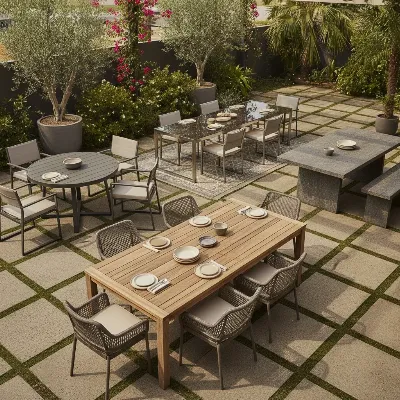 A variety of outdoor dining tables made from wood, metal, glass, and stone in a vibrant summer patio setting.
Buying Guide: Choosing Your Perfect Outdoor Dining Table
Selecting the ideal outdoor dining table involves more than just aesthetics; it’s about harmonizing function, space, and personal style. Consider these factors to ensure your choice enhances your summer patio experience for years to come.
Determining the Right Size for Your Space
The size of your outdoor dining table is paramount for both comfort and practical movement. Start by accurately measuring your patio or deck, considering the flow of foot traffic and proximity to other outdoor features. A good rule of thumb is to allow at least 3 feet (36 inches) of clearance on all sides of the table for chairs to be pulled out comfortably and for people to move around easily.
- For 2 people: A bistro table, typically 24-30 inches in diameter, is perfect for intimate settings or small balconies.
- For 4 people: A square table around 36 inches, or a round table with a 48-inch diameter, offers cozy seating.
- For 6 people: A rectangular table approximately 72 inches long, or a larger square/round option, provides ample space.
- For 8+ people: Look for longer rectangular tables (96+ inches) or extendable designs that can expand for larger gatherings.
Selecting the Ideal Material
The material dictates durability, maintenance, and overall aesthetic. Consider your local climate, how much maintenance you’re willing to commit to, and your desired style.
- For maximum durability and a classic look: Teak wood or high-quality powder-coated aluminum.
- For low maintenance and modern appeal: Aluminum, stainless steel, or HDPE.
- For a luxurious statement: Stone (granite, ceramic) tabletops.
- For budget-friendliness and weather resistance: Resin or synthetic wicker.
Exploring Outdoor Dining Table Styles
The style of your outdoor dining table should complement your home’s architecture and existing outdoor decor.
- Rectangular tables are classic and versatile, fitting well in larger spaces and accommodating more guests.
- Round tables foster intimate conversation and are excellent for smaller areas, promoting a sense of togetherness.
- Square tables offer a modern, clean look and work well in compact, contemporary settings.
- Extendable tables provide flexibility, allowing you to adjust seating capacity as needed, perfect for entertaining.
Considering Table Height for Comfort
Outdoor dining tables come in various heights, each offering a different dining experience.
- Standard Dining Height: Ranging from 28 to 30 inches, these tables are the most common and comfortable for traditional meals, pairing perfectly with chairs 17-19 inches tall.
- Counter Height: At 34-36 inches, counter-height tables offer a slightly elevated, more casual dining experience, ideal for smaller spaces or a relaxed bistro feel. They are typically paired with stools 24-26 inches high.
- Bar Height: Standing 40-42 inches tall, bar-height tables provide a dynamic, pub-like atmosphere and an elevated view, best suited for entertaining with stools 28-30 inches high.
Ensure there’s a comfortable 10 to 12 inches of space between the chair seat and the underside of the tabletop for optimal legroom and ease of movement.
Comparison Table: Outdoor Dining Table Materials at a Glance
Choosing the right material means balancing several practical aspects with your desired aesthetic. This table provides a quick overview to help you weigh your options for an outdoor dining table.
| Criteria | Wooden (Teak) | Glass (Tempered) | Metal (Aluminum) | Stone (Granite/Ceramic) | Resin (HDPE/Wicker) |
|---|---|---|---|---|---|
| Durability | High | Medium | High | Very High | High |
| Maintenance | Medium (oiling/sealing) | Medium (fingerprints/streaks) | Low (wiping) | Low (occasional sealing for natural stone) | Very Low |
| Price Range | High | Medium | Medium | High | Low to Medium |
| Style | Classic, Warm, Natural | Modern, Sleek, Airy | Modern, Industrial, Versatile | Luxurious, Elegant | Casual, Modern, Woven |
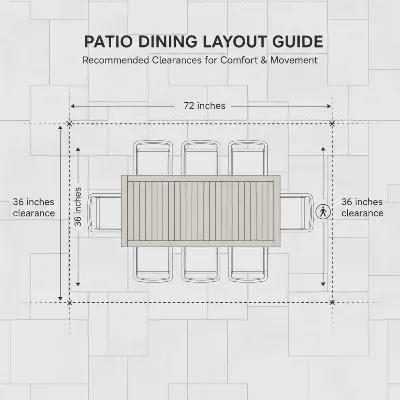 A diagram illustrating how to measure for an outdoor dining table, showing clearance space around the table for chairs and walkways.
Top Outdoor Dining Table Brands and Their Signature Styles
The market for outdoor dining tables features many reputable brands known for their quality, durability, and distinctive designs. These brands often integrate the latest trends and materials to provide excellent options for various outdoor spaces.
POLYWOOD
POLYWOOD is a leader in sustainable outdoor furniture, specializing in high-density polyethylene (HDPE) lumber. Their tables are renowned for extreme durability, fade resistance, and low maintenance, capable of withstanding harsh weather conditions without splintering, cracking, or rotting. POLYWOOD tables often feature clean lines and a classic aesthetic, making them versatile for modern or traditional patios. They are an excellent choice for those prioritizing longevity and eco-friendliness.
Crate & Barrel Outdoor
Crate & Barrel offers a curated selection of stylish and well-crafted outdoor dining tables, often featuring extendable designs and premium materials like powder-coated aluminum, solid eucalyptus, and teak. Their collections frequently showcase contemporary aesthetics, emphasizing clean lines and sophisticated finishes. Many of their sets are designed for comfortable large-group entertaining, with features like umbrella holes and durable, stain-resistant cushions.
Lark Manor
Lark Manor, often found through online retailers, provides a wide range of outdoor dining sets that balance value with quality. Their offerings frequently include powder-coated steel frames and breathable sling seats, designed to be durable and withstand varying weather conditions without rusting or fading. Lark Manor tables often cater to traditional and transitional styles, making them accessible and attractive options for many homeowners seeking a reliable outdoor dining solution.
Essential Tips for Maintaining Your Outdoor Dining Table
Proper maintenance is key to preserving the beauty and extending the lifespan of your outdoor dining table. Consistent care will ensure your patio remains an inviting space for summer gatherings season after season.
General Care Practices
Regardless of the material, a few universal practices can significantly enhance your table’s longevity.
- Regular Cleaning: Dust, dirt, and pollen accumulate quickly outdoors. Use a soft brush or cloth to remove loose debris, followed by mild soapy water for general cleaning. Rinse thoroughly with clean water and dry completely to prevent water spots or mildew.
- Prompt Spill Cleanup: Address spills immediately to prevent stains from setting, especially on porous surfaces like natural stone or unsealed wood. Blot the area gently; avoid rubbing, which can spread the stain.
- Protective Covers: Invest in high-quality, waterproof, UV-resistant, and breathable outdoor furniture covers. These shields protect your table from direct sunlight, rain, snow, and dust, significantly reducing wear and tear when the table is not in use or during off-seasons.
- Seasonal Inspections: Before and after the summer season, inspect your table for any signs of wear, rust, or damage, and address them promptly. Store cushions and accessories in a dry place during colder months.
Specific Maintenance by Material
Tailoring your cleaning approach to the material of your outdoor dining table will yield the best results.
- For Wooden Outdoor Dining Tables:
- Cleaning: Use a soft-bristle brush and mild soapy water. Avoid harsh chemicals that can strip natural oils. For teak, an annual application of teak oil helps maintain its golden hue and natural protection.
- Protection: Apply a wood sealant or oil annually to preserve its finish and protect against moisture and UV damage. Sand rough spots before treatment.
- For Glass Top Outdoor Dining Tables:
- Cleaning: A mixture of mild dish soap and warm water or a standard glass cleaner with a microfiber cloth works best. For stubborn stains or water spots, a vinegar-water solution can be effective.
- Caution: Avoid abrasive cleaners, steel wool, or gritty cloths, as these can scratch the glass. Be mindful of heavy impacts or sharp objects.
- For Metal Outdoor Dining Tables:
- Cleaning: Wipe down frames with a damp cloth and mild detergent. For powder-coated aluminum, this is often all that’s needed.
- Protection: Check for any signs of rust or chipped paint, especially on wrought iron or steel, and touch up with rust-resistant paint to prevent corrosion. Avoid strong abrasive cleaners.
- For Stone/Composite Outdoor Dining Tables:
- Cleaning: Use pH-neutral cleaners or mild dish soap with a soft cloth or sponge. For ceramic/porcelain, stubborn stains might require a baking soda paste.
- Protection: Natural stone like granite may require periodic sealing to maintain its stain resistance. Avoid harsh acids, bleach, or abrasive scrubbers, which can damage the surface.
- For Resin/HDPE Outdoor Dining Tables:
- Cleaning: Hot soapy water and a sponge are usually sufficient. For tougher grime, a pressure washer on a low setting or a garden hose can be used for solid HDPE or plastic.
- Stains: White distilled vinegar or baking soda can help with stubborn stains on plastic.
> “Investing a little time in maintenance will significantly extend the life and beauty of your outdoor dining table, allowing you to enjoy countless seasons of al fresco meals.” – Maria Rodriguez, Outdoor Furniture Specialist
Conclusion
Choosing the best outdoor dining table for your summer patio is an investment in countless memorable moments. By carefully considering the diverse range of materials, understanding the ideal size and style for your space, and committing to simple maintenance routines, you can select a table that not only endures the elements but also becomes a cherished centerpiece for family gatherings and lively entertaining. Whether you opt for the natural resilience of teak, the sleek modernity of aluminum, or the luxurious appeal of a stone top, your perfect outdoor dining table awaits, ready to host endless celebrations under the sun. Which style will define your summer patio?
Frequently Asked Questions
What’s the most durable material for an outdoor dining table?
High-quality teak wood and powder-coated aluminum are among the most durable materials for outdoor dining tables, offering excellent resistance to weather, rust, and general wear. HDPE lumber is also exceptionally durable and resistant to fading, moisture, and pests, making it a top contender for longevity.
How much space do I need around an outdoor dining table?
For comfortable seating and easy movement, you should ideally allow at least 3 feet (36 inches) of clearance on all sides of your outdoor dining table. This ensures chairs can be pulled out without obstruction and people can walk around the table freely.
Can outdoor dining tables be left outside all year?
While many modern outdoor dining tables are designed for weather resistance, leaving them uncovered year-round can shorten their lifespan. It’s highly recommended to use protective covers during inclement weather or off-seasons, and to store cushions and accessories indoors, especially in regions with harsh winters.
What’s the difference between counter height and bar height outdoor tables?
Counter height tables typically stand 34-36 inches tall, offering a slightly elevated dining experience and pairing with 24-26 inch stools. Bar height tables are taller, usually 40-42 inches, and are designed for 28-30 inch stools, providing a more casual, pub-style atmosphere with an even higher vantage point.
How do I clean an outdoor glass dining table without streaks?
To clean an outdoor glass dining table without streaks, use a solution of mild dish soap and warm water or a specialized glass cleaner. Apply with a soft microfiber cloth, then rinse thoroughly and dry immediately with a clean, dry microfiber cloth or a squeegee. Avoid cleaning in direct sunlight, as this can cause streaks.
Frequently Asked Questions
What's the most durable material for an outdoor dining table?
High-quality teak wood and powder-coated aluminum are among the most durable materials for outdoor dining tables, offering excellent resistance to weather, rust, and general wear. HDPE lumber is also exceptionally durable and resistant to fading, moisture, and pests, making it a top contender for longevity.
How much space do I need around an outdoor dining table?
For comfortable seating and easy movement, you should ideally allow at least 3 feet (36 inches) of clearance on all sides of your outdoor dining table. This ensures chairs can be pulled out without obstruction and people can walk around the table freely.
Can outdoor dining tables be left outside all year?
While many modern outdoor dining tables are designed for weather resistance, leaving them uncovered year-round can shorten their lifespan. It's highly recommended to use protective covers during inclement weather or off-seasons, and to store cushions and accessories indoors, especially in regions with harsh winters.
What's the difference between counter height and bar height outdoor tables?
Counter height tables typically stand 34-36 inches tall, offering a slightly elevated dining experience and pairing with 24-26 inch stools. Bar height tables are taller, usually 40-42 inches, and are designed for 28-30 inch stools, providing a more casual, pub-style atmosphere with an even higher vantage point.
How do I clean an outdoor glass dining table without streaks?
To clean an outdoor glass dining table without streaks, use a solution of mild dish soap and warm water or a specialized glass cleaner. Apply with a soft microfiber cloth, then rinse thoroughly and dry immediately with a clean, dry microfiber cloth or a squeegee. Avoid cleaning in direct sunlight, as this can cause streaks.
Choosing Your Perfect Outdoor Dining Table
Selecting the ideal outdoor dining table involves harmonizing function, space, and personal style to enhance your summer patio experience.
Measure your patio or deck accurately, allowing at least 3 feet (36 inches) of clearance on all sides for comfortable chair movement. For 4 people, a 36-inch square or 48-inch round table is suitable.
Consider your local climate, maintenance commitment, and desired aesthetic. Teak wood or powder-coated aluminum offer maximum durability, while resin/HDPE provides budget-friendliness and weather resistance.
Choose a style that complements your home's architecture. Rectangular tables are versatile for larger spaces, round tables foster intimate conversation, and extendable tables offer flexibility for entertaining.
Standard dining height (28-30 inches) is common for traditional meals. Counter height (34-36 inches) offers a casual feel, and bar height (40-42 inches) provides an elevated, pub-like atmosphere. Ensure 10-12 inches of space between the chair seat and tabletop.
Get our weekly buyer guide
Practical specs, not advice. Unsubscribe anytime.

I was looking for something really low maintenance, and the mention of HDPE lumber caught my eye. While it’s super durable and easy to clean, I do wish there were more color options available. The one we got is fine, but a bit more variety would have been nice to match our existing decor better.
We finally upgraded our patio table after years of using a flimsy plastic one. The post really helped me understand the benefits of teak wood. It’s definitely an investment, but the quality is amazing and it looks so elegant on our deck. I’m confident it will last for many seasons to come.
This was super helpful in narrowing down my choices. I ended up going with a powder-coated aluminum table, and it’s been fantastic. It’s lightweight enough to move around if needed, but still feels really sturdy. Plus, it handles the rain and sun like a champ, which is essential here in Florida.
The tip about allowing 3 feet of clearance around the table was a game-changer for us! We always felt cramped before, but now our patio feels so much more spacious and comfortable. We chose an acacia wood table, and it’s beautiful and holds up well to our family dinners outside.