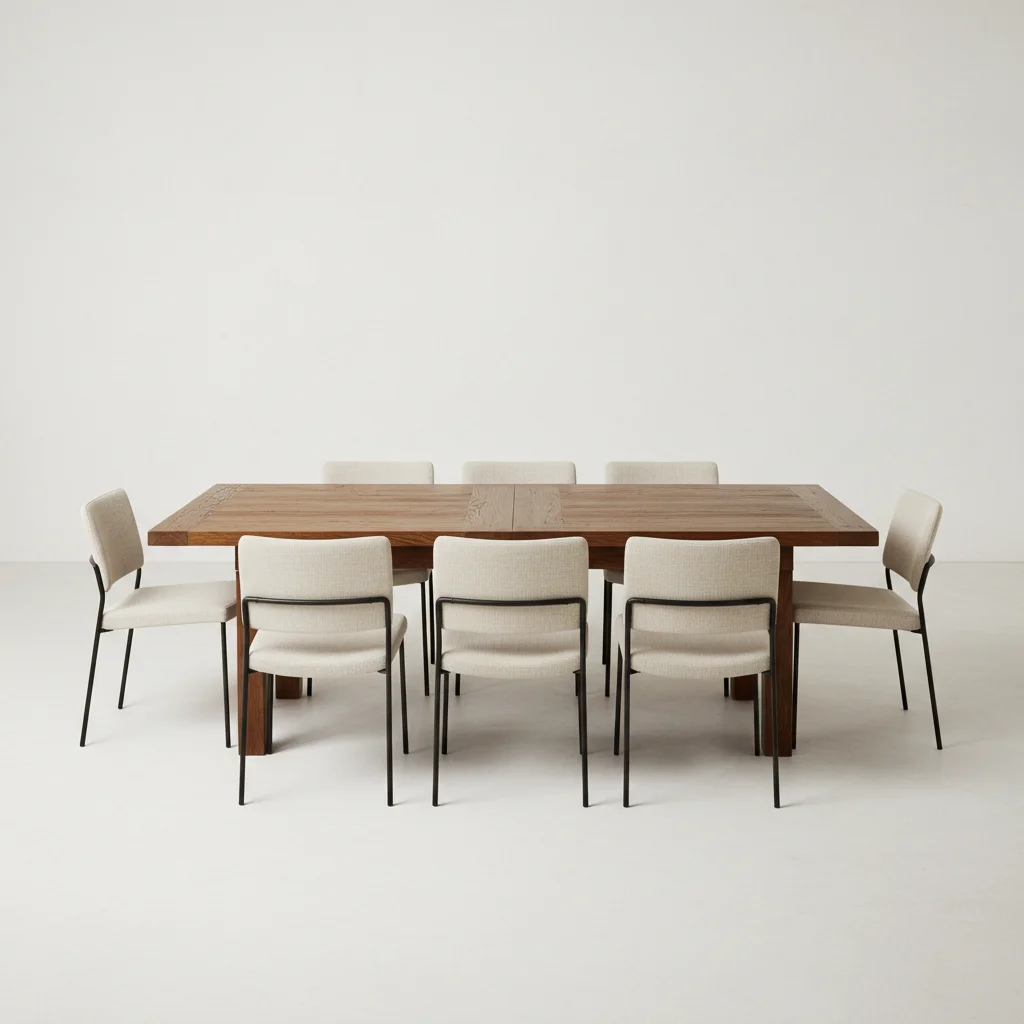
Determining the ideal dining table seating capacity is crucial for both comfort and functionality. Generally, a standard rectangular dining table requires approximately 24 inches of width per person for comfortable seating, with an additional 6-12 inches at each end for head-of-table seating. This means a 60-inch long table typically seats 4-6 people, while an 84-inch table can accommodate 6-8 guests comfortably.
Understanding Standard Seating Dimensions
When planning your dining space, it’s essential to consider the standard dimensions for comfortable seating. Each diner needs adequate elbow room and space to maneuver. A general rule of thumb is to allocate at least 24 inches of table edge per person. For tables with legs at the corners, this measurement is straightforward. However, pedestal or trestle tables can sometimes allow for slightly more flexible seating arrangements, as there are no corner legs to obstruct chairs.
Beyond the table’s edge, consider the space behind each chair. You’ll want at least 36 inches between the table edge and any wall or furniture to allow guests to pull out their chairs and move around easily. For high-traffic areas, even more space, up to 48 inches, is advisable.
Rectangular and Oval Dining Tables
Rectangular and oval dining tables are among the most common shapes and offer predictable seating capacities. A 60-inch long table typically seats 4-6 people, with two on each long side and potentially one at each end if the width allows. An 84-inch table comfortably seats 6-8, and a 96-inch table can often accommodate 8-10. For larger gatherings, tables exceeding 100 inches can seat 10-12 or more, depending on their width. Always factor in the table’s width; a wider table (40-44 inches) offers more space for serving dishes, but doesn’t necessarily increase the number of people who can sit along the length.
- 60-inch table: 4-6 people
- 72-inch table: 6-8 people
- 84-inch table: 8-10 people
- 96-inch table: 10-12 people
- 120-inch table: 12-14 people
Round and Square Dining Tables
|
Our Picks for the Best Dining Table in 2026
As an Amazon Associate I earn from qualifying purchases.
|
||
| Num | Product | Action |
|---|---|---|
| 1 | Dining Table for 6-8, 63" Large Kitchen Table, Industrial Dining Room Table, Wooden Rectangular Table with Adjustable Feet, for Dinner, Kitchen, Walnut and Black CZ03BH |

|
| 2 | Black Round Dining Table for 6 - Modern Circle 51 Inch Large Room Kitchen Dinning Tables for 4 to 6 Person Seats Small Spaces Wood Dinner Mesa De Comedor Redonda |
|
| 3 | Walker Edison Durango Distressed Solid Wood Dining Table, 72 Inch, Mahogany |
|
| 4 | Winsome Groveland Wooden Square Dining Table |
|
| 5 | East West Furniture NFT-BLK-T Norfolk Kitchen Table - a Rectangle Dining Table Top with Butterfly Leaf, 32x54 Inch, Black |
|
| 6 | IDEALHOUSE Dining Table Set for 4, Kitchen Table with Upholstered Bench, Rectangular Dining Room Table Set with 2 Benches, 3 Piece Kitchen Table Set for Small Space, Apartment, Studio, Rustic Brown |
|
| 7 | Signature Design by Ashley Coviar 5 Piece Counter Height Dining Set, Includes Table & 4 Barstools, Brown |
|
| 8 | Signature Design by Ashley Bridson 6 Piece Dining Set, Includes Rectangular Dining Table, 4 Ladderback Chairs & Bench, Wood, 36" W x 60.13" D x 30" H, Gray |
|
| 9 | VECELO 3-Piece 63" Extendable Kitchen Table with Benches/Chairs, Modern Breakfast Dinette/Dining Room Set for 4/6/2, Small Space Saving Design, Easy Assembly |
|
| 10 | CONSDAN Small Dining Table for 2, Extendable Dining Table, Walnut Veneer and Solid Wood Structure – Space-Saving Design, Ideal for Compact Dining Space and Expands for Larger Dining Areas |
|
Round and square dining tables have different seating dynamics. A 48-inch round table typically seats 4 people comfortably, while a 60-inch round table can accommodate 6-8. For square tables, a 36-inch square table is ideal for 2-4 people, and a 48-inch square table can seat 4-6. The advantage of round tables is that they often feel more intimate and allow for easier conversation among all guests, as there are no ‘head’ or ‘foot’ positions. However, they can be less efficient with space in very narrow rooms.
When choosing a round table, consider the diameter carefully. A table that is too large can make it difficult for guests to reach items in the center, while one that is too small will feel cramped.
Expandable and Leaf Tables
Expandable dining tables, often featuring one or more leaves, are an excellent solution for those who need flexible seating capacity. These tables allow you to adjust the length to accommodate more guests when needed, then reduce it for everyday use. A table that expands from 60 inches to 84 inches can increase its seating capacity from 4-6 to 6-8, making it highly versatile for entertaining. When evaluating expandable tables, check the ease of adding and removing leaves, and ensure the stored leaves are convenient to access.
Some tables feature butterfly leaves that fold and store within the table itself, offering a seamless and convenient expansion mechanism. Others require external storage for the leaves. Consider your storage capabilities and how frequently you anticipate needing the extra seating.
Factors Affecting Actual Seating
While general guidelines are helpful, several factors can influence the actual number of people you can comfortably seat. The style of dining chairs plays a significant role; chairs with wide arms or bulky designs will require more space than armless or slender chairs. The presence of a pedestal base versus traditional legs can also impact how many chairs can be tucked in. Furthermore, if you frequently host large meals with many serving dishes, a wider table might be more practical, even if it means slightly fewer people can sit along the length. Always measure your chairs and consider your typical dining habits before making a final decision.
Get our weekly buyer guide
Practical specs, not advice. Unsubscribe anytime.
