There’s nothing quite as unsettling during a meal as a dining table that refuses to stand still. That persistent wobble, the clinking of glasses, the fear of a spill—it can transform a pleasant dining experience into an exercise in frustration. Whether your table has developed an annoying sway over time, or you’ve just moved it to a new spot, a wobbly dining table is a common household nuisance. The good news is that most wobbly table issues can be resolved quickly and effectively with simple DIY methods, often using tools and materials you already have around the house. You don’t need to be a seasoned carpenter to bring stability back to your centerpiece; a little understanding of the causes and the right approach can make your dining table rock-steady once more.
Common Causes of a Wobbly Dining Table
Understanding why your dining table wobbles is the first step toward a lasting fix. It’s rarely a mysterious curse, but rather a result of a few common factors related to the table itself or its environment.
Uneven Leg Lengths
One of the most frequent culprits is simply that one or more table legs are not the same length as the others. This can occur due to manufacturing imperfections, wear and tear over time, or slight damage to a leg’s base. Even a minor difference in height can cause a significant wobble.
Loose Joints and Hardware
Dining tables are typically assembled with screws, bolts, and wooden joints (like mortise and tenon or dowel joints). Over months or years of use, sliding the table, leaning on it, or even changes in humidity causing wood to expand and contract, can loosen these connections. When the joints that attach the legs to the tabletop or apron become loose, the table loses its structural integrity and begins to shake.
Uneven Flooring
Sometimes, the table itself is perfectly sound, but the floor it sits on is not. Old homes, tiled floors, or even minor undulations in carpeting can create an uneven surface. When one leg rests in a slightly lower spot, the table will rock back and forth, giving the illusion of a table defect.
Worn or Damaged Components
Beyond simple loosening, components can wear out or become damaged. Screw holes can strip, wood can crack at stress points, or attachment brackets can bend. These issues compromise the table’s stability and require attention to restore its firmness.
Quick Fixes for Immediate Stability
When you need an immediate solution to stop your dining table from wobbling, there are several fast and easy tricks that don’t require special tools. These methods are perfect for temporary relief or minor imbalances.
Shims and Wedges
|
Our Picks for the Best Dining Table in 2026
As an Amazon Associate I earn from qualifying purchases.
|
||
| Num | Product | Action |
|---|---|---|
| 1 | IDEALHOUSE Dining Table Set for 4, Kitchen Table with Upholstered Bench, Rectangular Dining Room Table Set with 2 Benches, 3 Piece Kitchen Table Set for Small Space, Apartment, Studio, Rustic Brown |

|
| 2 | Black Round Dining Table for 6 - Modern Circle 51 Inch Large Room Kitchen Dinning Tables for 4 to 6 Person Seats Small Spaces Wood Dinner Mesa De Comedor Redonda |
|
| 3 | Walker Edison Durango Distressed Solid Wood Dining Table, 72 Inch, Mahogany |
|
| 4 | Signature Design by Ashley Bridson 6 Piece Dining Set, Includes Rectangular Dining Table, 4 Ladderback Chairs & Bench, Wood, 36" W x 60.13" D x 30" H, Gray |
|
| 5 | CONSDAN Small Dining Table for 2, Extendable Dining Table, Walnut Veneer and Solid Wood Structure – Space-Saving Design, Ideal for Compact Dining Space and Expands for Larger Dining Areas |
|
| 6 | Winsome Groveland Wooden Square Dining Table |
|
| 7 | Signature Design by Ashley Coviar 5 Piece Counter Height Dining Set, Includes Table & 4 Barstools, Brown |
|
| 8 | Dining Table for 6-8, 63" Large Kitchen Table, Industrial Dining Room Table, Wooden Rectangular Table with Adjustable Feet, for Dinner, Kitchen, Walnut and Black CZ03BH |
|
| 9 | East West Furniture NFT-BLK-T Norfolk Kitchen Table - a Rectangle Dining Table Top with Butterfly Leaf, 32x54 Inch, Black |
|
| 10 | VECELO 3-Piece 63" Extendable Kitchen Table with Benches/Chairs, Modern Breakfast Dinette/Dining Room Set for 4/6/2, Small Space Saving Design, Easy Assembly |
|
The classic quick fix involves placing a shim under the shortest leg. Common household items like a folded matchbook, a stack of paper towels, a piece of cardboard, or even a sliced wine cork can serve as makeshift shims. You simply identify the leg that isn’t touching the floor firmly and slide your chosen material underneath until the table is stable. For a more professional look and feel, purpose-made plastic or wooden furniture wedges are available at hardware stores and can be trimmed to fit perfectly.
The Quarter-Turn Method
For tables with four legs, an unexpectedly effective solution is the “quarter-turn” method. If your table wobbles, try rotating it 90 degrees. This simple rotation can sometimes redistribute the weight on an uneven floor, allowing all four legs to find a more stable position and eliminate the wobble without any tools or materials.
Furniture Pads
Self-adhesive furniture felt pads, typically used to prevent floor scratches, can also be a quick fix for minor leg height discrepancies. Available in various thicknesses, you can apply one or more pads to the bottom of the shorter leg(s) to level the table. These are easy to apply and can be removed without damage, offering a discreet solution.
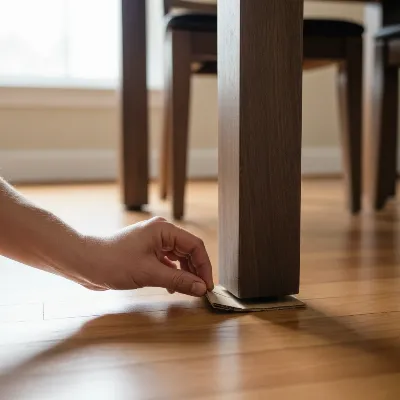 A person carefully sliding a folded cardboard shim under a wobbly dining table leg on a hardwood floor.
Permanent DIY Solutions for Lasting Stability
While quick fixes are great for temporary relief, investing a little more time in a permanent solution will ensure your dining table remains stable for years to come. These DIY repairs address the root causes of wobbling.
Tighten Loose Screws and Bolts
This is often the simplest and most effective permanent fix. Carefully flip your dining table upside down on a soft surface to protect the tabletop. Inspect all connections where the legs attach to the table apron or frame. Use the appropriate screwdriver or hex key to tighten any loose screws or bolts. Work in a cross-pattern, similar to tightening lug nuts on a car tire, to ensure even pressure and prevent overtightening. Be firm but avoid stripping the screw heads or wood.
Reinforce Joints with Wood Glue or Epoxy
If tightening hardware doesn’t resolve the wobble, or if your table relies on wooden joints, these connections might be failing. For wooden joints, carefully disassemble the wobbly leg (if possible) and apply wood glue generously into the joint. Wood glue expands as it dries, creating a strong bond. If disassembly isn’t practical, try to work glue into any visible gaps. Use clamps to hold the joint tightly together while the glue dries completely, typically for at least 24 hours. For stripped screw holes, fill the hole with wood glue and a few toothpicks or wooden matchsticks, let it dry, then re-insert and tighten the screw. Epoxy offers an even stronger bond, though it can be a bit harder to work with.
Install Adjustable Leveling Feet
For ongoing issues with uneven floors or slightly mismatched legs, adjustable leveling feet are an excellent long-term solution. These threaded feet screw into the bottom of your table legs, allowing you to precisely adjust each leg’s height by rotating it. They are available in various sizes and materials (metal, rubber, plastic) and can significantly improve stability on challenging surfaces. Installation usually involves drilling a pilot hole into the bottom of each leg and screwing the levelers in.
Adding Brackets or Corner Braces
When the table’s frame or apron feels weak, adding L-brackets or corner braces can provide substantial reinforcement. These metal brackets are screwed into the inside corners where the legs meet the apron, creating a stronger, more rigid connection. This method is particularly effective for tables where the original joints have significantly deteriorated or where the design lacks sufficient lateral support. Ensure the screws used are appropriate for the wood thickness to prevent splitting.
Trimming or Extending Legs
For severe cases of uneven leg lengths, you might need to either trim the longer legs or extend the shorter ones. Trimming requires careful measurement, a saw, and a sander to ensure all legs are perfectly even. Extending a leg can be done by securely attaching a block of wood to the bottom of the shortest leg, then trimming and sanding it to match. This method is more involved and might be best left to someone with some woodworking experience to ensure precision.
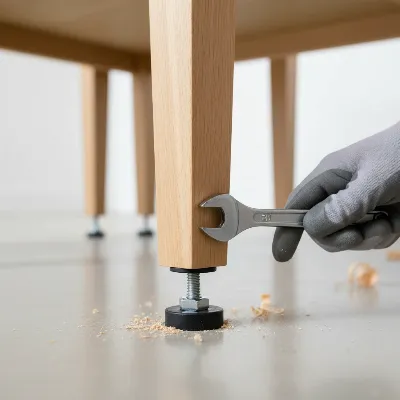 Adjustable leveling feet installed on the underside of a wooden dining table leg, with tools nearby.
Comparison of Dining Table Fixing Methods
Choosing the right method depends on the cause of the wobble, the tools you have, and how permanent you want the fix to be.
| Method | Quickness | Difficulty | Permanence | Tools Needed |
|---|---|---|---|---|
| Shims / Wedges | Very High | Very Low | Low | None / Utility knife |
| Tighten Hardware | High | Low | Medium | Screwdriver / Hex Key |
| Wood Glue / Epoxy | Medium | Medium | High | Wood glue, clamps (optional) |
| Adjustable Leveling Feet | Medium | Medium | High | Drill, Screwdriver, Levelers |
| Brackets / Corner Braces | Medium | High | High | Drill, Screws, Brackets |
| Trimming / Extending Legs | Low | High | High | Saw, Sander, Measuring Tape |
Preventative Maintenance Tips
Keeping your dining table stable doesn’t have to be a one-time repair. A few simple maintenance practices can prevent future wobbles and prolong your table’s life.
Regularly Check and Tighten Hardware
Make it a habit to periodically inspect your dining table’s screws and bolts. A quick check and tightening every few months can catch loose connections before they become a major problem. This is especially important if your table is frequently moved or heavily used.
Avoid Dragging the Table
When moving your dining table, always lift it rather than dragging it across the floor. Dragging puts immense stress on the leg joints and can quickly loosen hardware and weaken structural integrity, leading to wobbles. If it’s too heavy to lift, consider using furniture sliders.
Use Coasters or Protective Mats
While not directly related to wobbles, protecting your tabletop from moisture and heat damage ensures the overall longevity of your dining table. This helps maintain the integrity of the wood, which can indirectly contribute to joint stability over time.
“A stable dining table isn’t just about comfort; it’s about preserving the integrity of your furniture. Simple maintenance can save you from costly repairs and keep your dining space functional and inviting.” – Home Improvement Expert
Conclusion
A wobbly dining table doesn’t have to be a permanent fixture in your home. With a little investigation into the cause and the right DIY approach, you can quickly and effectively restore its stability. From simple shims and tightening hardware to more robust solutions like wood glue or leveling feet, there’s a fix for almost every situation. Regular maintenance and careful handling will also go a long way in preventing future wobbles, ensuring your dining table remains a steady and welcoming gathering spot for family and friends. Don’t let a shaky surface detract from your meals; empower yourself with these solutions to enjoy a firm foundation for every dining experience.
What’s your go-to trick for keeping your dining table steady?
Frequently Asked Questions
How can I tell which leg is shorter without special tools?
You can usually identify the shortest leg by observing which leg lifts off the ground when the table wobbles. Another method is to gently press down on each corner of the table. The leg that lifts when the opposite corner is pressed is likely the short one. For more precision, place a level on the tabletop and note which direction it slopes, then check the legs on the lower side.
Can I use super glue instead of wood glue for loose joints?
While super glue (cyanoacrylate) can provide a strong bond, wood glue is generally recommended for fixing wooden joints. Wood glue is designed to penetrate wood fibers, offering a more flexible and durable bond that can withstand the natural expansion and contraction of wood. Super glue can be brittle and may not hold up as well over time in high-stress areas like table joints.
How often should I check my dining table for wobbles?
It’s a good practice to check your dining table for any signs of wobbling periodically, perhaps every few months or whenever you notice slight instability. You should also check it after moving the table, rearranging your room, or if it experiences heavy use, as these actions can put stress on the joints and hardware.
What if my floor is very uneven, not just one small spot?
For significantly uneven floors, adjustable leveling feet are the most effective long-term solution as they allow for precise customization of each leg’s height. If installing levelers isn’t an option, you might consider placing a larger, stable mat or rug under the entire table to create a more even surface, or using larger, custom-cut wooden shims if the unevenness is concentrated in one area.
Get our weekly buyer guide
Practical specs, not advice. Unsubscribe anytime.
