Choosing the ideal dining table for a small space involves selecting designs that balance style, efficiency, and adaptability, such as extendable, drop-leaf, round, oval, wall-mounted, or pedestal base tables. These options maximize comfort and functionality in confined areas by offering flexible seating, improved traffic flow, and a visually lighter footprint. For instance, a round table with a 30-36 inch diameter can comfortably seat two to four people while optimizing space.
Popular Types of Dining Tables for Small Spaces
Choosing the right type of dining table for a compact area involves balancing aesthetics with smart, space-saving features. Modern designs prioritize adaptability and visual lightness, ensuring your home feels open and welcoming rather than cramped.
Extendable and Drop-Leaf Dining Tables
Extendable dining tables are a game-changer for small spaces, offering remarkable flexibility. These tables typically feature leaves that can be added or removed, allowing you to expand the surface for guests or special occasions and then retract it for daily use. Drop-leaf tables, a specific type of extendable design, have hinged sections that can be folded down, creating a narrow console against a wall when not in use. Some even include butterfly extensions that fold and store neatly within the table itself. This adaptability means you don’t have to compromise on hosting capabilities, providing both compact storage and ample seating when needed. For dining tables buying guides on this site.
Round and Oval Dining Tables
For small rooms, round and oval tables are often superior to their rectangular counterparts. Their curved edges eliminate sharp corners, improving traffic flow and preventing bumps in tight areas. This shape naturally encourages more intimate conversations and allows for flexible seating, as you can often squeeze in an extra chair without rigid edge constraints. Pedestal bases, common in round and oval designs, further enhance legroom and contribute to a visually lighter footprint by removing bulky corner legs. They are perfect for breakfast nooks or open-plan kitchens where smooth movement is essential.
Wall-Mounted and Folding Tables
When floor space is at an absolute premium, wall-mounted and folding tables provide ingenious solutions. Wall-mounted tables can fold neatly against the wall when not in use, essentially disappearing to free up valuable floor space. Some even offer a dual function, serving as a shelf or decorative element when folded. Folding tables, on the other hand, are freestanding units that can be collapsed and stored away completely, ideal for multi-purpose rooms or for those who only need a dining surface occasionally. These designs are a testament to minimalist functionality, ensuring your living area remains uncluttered.
Pedestal Base Tables
|
Our Picks for the Best Dining Table in 2026
As an Amazon Associate I earn from qualifying purchases.
|
||
| Num | Product | Action |
|---|---|---|
| 1 | East West Furniture NFT-BLK-T Norfolk Kitchen Table - a Rectangle Dining Table Top with Butterfly Leaf, 32x54 Inch, Black |

|
| 2 | VECELO 3-Piece 63" Extendable Kitchen Table with Benches/Chairs, Modern Breakfast Dinette/Dining Room Set for 4/6/2, Small Space Saving Design, Easy Assembly |
|
| 3 | Winsome Groveland Wooden Square Dining Table |
|
| 4 | CONSDAN Small Dining Table for 2, Extendable Dining Table, Walnut Veneer and Solid Wood Structure – Space-Saving Design, Ideal for Compact Dining Space and Expands for Larger Dining Areas |
|
| 5 | Signature Design by Ashley Coviar 5 Piece Counter Height Dining Set, Includes Table & 4 Barstools, Brown |
|
| 6 | Walker Edison Durango Distressed Solid Wood Dining Table, 72 Inch, Mahogany |
|
| 7 | IDEALHOUSE Dining Table Set for 4, Kitchen Table with Upholstered Bench, Rectangular Dining Room Table Set with 2 Benches, 3 Piece Kitchen Table Set for Small Space, Apartment, Studio, Rustic Brown |
|
| 8 | Dining Table for 6-8, 63" Large Kitchen Table, Industrial Dining Room Table, Wooden Rectangular Table with Adjustable Feet, for Dinner, Kitchen, Walnut and Black CZ03BH |
|
| 9 | Signature Design by Ashley Bridson 6 Piece Dining Set, Includes Rectangular Dining Table, 4 Ladderback Chairs & Bench, Wood, 36" W x 60.13" D x 30" H, Gray |
|
| 10 | Black Round Dining Table for 6 - Modern Circle 51 Inch Large Room Kitchen Dinning Tables for 4 to 6 Person Seats Small Spaces Wood Dinner Mesa De Comedor Redonda |
|
Pedestal base dining tables, characterized by a single central support rather than four legs, are particularly advantageous for small spaces. This design maximizes legroom for diners, as there are no corner legs to obstruct seating. It also allows for greater flexibility in chair placement and makes it easier to maneuver around the table. Visually, a pedestal base can make a table appear less bulky, contributing to an open and airy feel in a compact dining area.
Buying Guide for Small Space Dining Tables
Choosing the right dining table for your compact home requires careful consideration of several factors. A smart purchase will enhance both the functionality and aesthetic appeal of your limited space.
Determine the Right Size
The first and most crucial step is to accurately measure your dining area. Beyond the table’s footprint, you need to account for comfortable clearance around it. A general rule of thumb is to allow at least 36 inches (approximately 90 cm) of space between the table’s edge and any walls or other furniture. This ensures enough room for chairs to be pulled out and for people to move comfortably. For tables placed against a wall, a minimum of 18 inches (45 cm) of clearance is recommended behind the chairs. For two to four people, a round table with a diameter of 30-36 inches or a rectangular table measuring approximately 36 x 48 inches often works well, balancing seating capacity with space efficiency.
Choose the Right Material
The material of your dining table significantly influences both its durability and its visual impact in a small room.
- Glass Tops: These are excellent for creating an illusion of space, as they allow light to pass through and reflect the surroundings, making the room feel larger and more open. They lend a modern, sleek aesthetic but require frequent cleaning to avoid smudges.
- Light-Colored Wood: Materials like oak, birch, ash, or pine in light finishes add warmth and natural beauty without making the space feel heavy. Kiln-dried hardwoods offer durability and resistance to warping.
- Metal: Often used for bases or slim frames, metal contributes to a modern, industrial look and offers durability. Paired with glass or wood tops, metal bases create a striking balance of strength and style while maintaining a light visual profile.
- Sintered Stone/Ceramic: These materials offer a luxurious look, exceptional heat and scratch resistance, and are easy to clean. Their smooth, often light-colored surfaces can contribute to an open feel.
Select the Ideal Style and Shape
The shape of your dining table is paramount in a small space:
- Round Tables: Promote intimacy and efficient movement due to the lack of sharp corners. They fit well into corners or small nooks.
- Oval Tables: Similar to round tables, they offer smooth flow and a softer aesthetic, working well in narrow rooms or open-plan layouts.
- Rectangular Tables: Best suited for long, narrow rooms or when placed against a wall. Compact or narrow rectangular designs can be highly efficient.
- Square Tables: Provide balance in square-shaped rooms and can sometimes be pushed against a wall to save space.
Consider a table with clean lines and a minimalist design, as these styles prevent the area from feeling cluttered and contribute to a more open ambiance.
Consider Table Height
Standard dining table height typically ranges from 29-30 inches (73-76 cm), ensuring comfortable seating with standard dining chairs. For very small or multi-functional spaces, a bar-height table and stools can draw the eye upwards, giving the illusion of more space and potentially doubling as a prep area in a kitchen. Ensure that whatever height you choose, there’s ample legroom and comfortable seating for everyone.
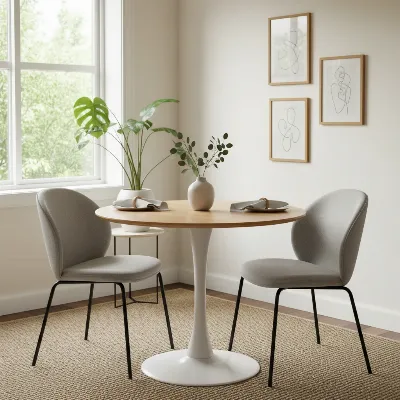 A modern round dining table with a pedestal base, seating two to three people in a bright, minimalist small apartment dining area.
Comparison of Small Space Dining Table Types
Choosing the best small space dining table involves weighing various factors, from how much room it actually saves to its maintenance needs and overall aesthetic.
| Feature | Extendable/Drop-Leaf | Round/Oval | Wall-Mounted/Folding | Pedestal Base | Compact Rectangular/Square |
|---|---|---|---|---|---|
| Space Saving | Excellent (flexible) | Good (no corners) | Excellent (collapsible) | Good (legroom) | Moderate (wall-fit) |
| Durability | Varies by mechanism | High | Moderate | High | High |
| Maintenance | Moderate (moving parts) | Easy | Easy | Easy | Easy |
| Style | Versatile | Inviting, fluid | Modern, minimalist | Elegant, open | Traditional, functional |
| Flexibility | High (seating capacity) | High (seating arrangement) | High (floor space) | High (legroom) | Moderate |
| Best For | Occasional guests | Small families, nooks | Micro-apartments, occasional use | Maximizing legroom | Narrow rooms, against walls |
What to Look for in Quality Dining Table Brands
When investing in a dining table for a small space, the brand’s reputation for quality, design, and customer service is paramount. While there isn’t a definitive “top 10 list” of individual products that remains constant, here are key attributes to seek out in reputable manufacturers:
Focus on Innovative Space-Saving Designs
Look for brands that specialize in furniture for compact living. These companies often pioneer designs like seamlessly integrated extendable mechanisms, tables with hidden storage, or clever folding solutions that don’t compromise on stability or style. They understand that multi-functionality is key.
Commitment to Durable Materials
Quality brands utilize robust materials that can withstand daily use, especially when tables serve multiple purposes. This includes solid hardwoods (oak, walnut), tempered glass, high-quality engineered wood with durable veneers, and sturdy metal frames. They prioritize materials that offer longevity and easy maintenance, ensuring your investment stands the test of time.
Aesthetic Appeal and Versatility
Top brands offer a range of styles, from sleek modern to classic Scandinavian, ensuring their small-space solutions integrate effortlessly into various interior décors. They focus on clean lines, light finishes, and thoughtful details that contribute to an open and airy feel, rather than bulky designs that overwhelm a small room.
Tips for Maintaining Your Small Space Dining Table
Proper care can significantly extend the life and beauty of your dining table, regardless of its material. Regular maintenance is especially important for tables in small spaces, where they often see more frequent and varied use.
For Wooden Dining Tables
Wooden tables, while durable, require specific care to maintain their luster.
- Protection: Always use coasters, placemats, and hot pads to shield the surface from moisture, heat, and scratches.
- Cleaning: Wipe spills immediately with a soft, slightly damp cloth. Avoid harsh chemical cleaners, which can strip the wood’s finish. Use wood-specific cleaners or polishes periodically, following the product instructions.
- Environment: Protect wooden tables from direct sunlight, which can cause fading or warping. Maintain consistent humidity levels in your home to prevent the wood from drying out or swelling.
For Glass Dining Tables
Glass tops offer a modern look but can be prone to fingerprints and smudges.
- Cleaning: Use a soft, lint-free cloth and a glass cleaner or a mixture of vinegar and water. Wipe in one direction to avoid streaks.
- Prevention: While tempered glass is strong, avoid placing extremely heavy or sharp objects directly on the surface without protection.
- Safety: Be mindful of the edges and corners, especially if you have children or pets, to prevent accidents.
For Metal Dining Tables
Metal bases and frames are generally robust and easy to care for.
- Cleaning: Wipe down metal surfaces with a soft, damp cloth. For stubborn spots, a mild soap solution can be used, followed by drying thoroughly to prevent water spots or rust.
- Avoid Harsh Chemicals: Strong abrasive cleaners can damage the finish.
- Rust Prevention: If the metal is exposed to moisture, ensure it is completely dry to prevent rust, especially in humid environments.
> “In small spaces, every piece of furniture must earn its place. A well-chosen dining table doesn’t just serve meals; it defines the heart of your home, offering flexibility and style in equal measure.” – Maria Chen, Interior Design Consultant
Conclusion
Selecting the perfect dining table for a small space is about more than just finding a compact size; it’s about choosing a piece that enhances your daily life, adapts to your needs, and reflects your personal style. By prioritizing smart designs like extendable, drop-leaf, round, or wall-mounted tables, and opting for materials that visually open up a room, you can create a dining area that feels both spacious and inviting. Remember to measure carefully, consider multi-functionality, and maintain your chosen table to ensure it remains a cherished part of your home for years to come.
What innovative ways have you found to make your dining area shine in a small space?
Frequently Asked Questions
What dining table shapes are best for really small apartments?
Round and oval dining tables are generally best for very small apartments. Their lack of sharp corners improves traffic flow and creates a more intimate dining experience, making the most of limited square footage. Extendable or drop-leaf designs also offer flexible seating when needed.
How much clearance space do I need around a small dining table?
For comfortable movement and seating, aim for at least 36 inches (approximately 90 cm) of clearance between the edge of your dining table and any surrounding walls or furniture. If the table is placed against a wall, 18 inches (45 cm) behind the chairs can suffice.
Can a dining table for a small space also be used as a workspace?
Absolutely! Many dining tables for small spaces are designed with multi-functionality in mind. Look for models with durable, easy-to-clean surfaces and stable construction. Extendable or folding tables are particularly versatile, allowing you to adapt the surface area to your work needs.
What materials make a small dining room look bigger?
Glass tabletops are excellent for making a small dining room appear larger, as they reflect light and offer a transparent, airy feel. Light-colored wood finishes, such as oak or birch, and slim metal frames also contribute to an open and uncluttered aesthetic.
Are benches or chairs better for small dining areas?
Benches can be a more space-efficient option for small dining areas because they can often tuck neatly under the table when not in use, freeing up floor space. They also offer flexible seating, potentially accommodating more people than individual chairs in the same footprint.
What is the smallest practical dining table width?
The smallest practical width for a dining table that can comfortably accommodate place settings across from each other is generally around 30 inches (75 cm). This allows enough room for two people to eat without feeling cramped, though a slightly wider table (36 inches) offers more comfort and central space.
How do I choose chairs that complement a small dining table?
For small dining tables, select chairs with a slim profile and no arms, as these can be tucked under the table more easily. Stackable chairs or benches are also excellent choices for maximizing space, providing extra seating only when needed. Light colors and minimalist designs for chairs further enhance an open feel.
Frequently Asked Questions
What dining table shapes are best for really small apartments?
Round and oval dining tables are generally best for very small apartments. Their lack of sharp corners improves traffic flow and creates a more intimate dining experience, making the most of limited square footage. Extendable or drop-leaf designs also offer flexible seating when needed.
How much clearance space do I need around a small dining table?
For comfortable movement and seating, aim for at least 36 inches (approximately 90 cm) of clearance between the edge of your dining table and any surrounding walls or furniture. If the table is placed against a wall, 18 inches (45 cm) behind the chairs can suffice.
Can a dining table for a small space also be used as a workspace?
Absolutely! Many dining tables for small spaces are designed with multi-functionality in mind. Look for models with durable, easy-to-clean surfaces and stable construction. Extendable or folding tables are particularly versatile, allowing you to adapt the surface area to your work needs.
What materials make a small dining room look bigger?
Glass tabletops are excellent for making a small dining room appear larger, as they reflect light and offer a transparent, airy feel. Light-colored wood finishes, such as oak or birch, and slim metal frames also contribute to an open and uncluttered aesthetic.
Are benches or chairs better for small dining areas?
Benches can be a more space-efficient option for small dining areas because they can often tuck neatly under the table when not in use, freeing up floor space. They also offer flexible seating, potentially accommodating more people than individual chairs in the same footprint.
What is the smallest practical dining table width?
The smallest practical width for a dining table that can comfortably accommodate place settings across from each other is generally around 30 inches (75 cm). This allows enough room for two people to eat without feeling cramped, though a slightly wider table (36 inches) offers more comfort and central space.
Choosing a Dining Table for Small Spaces
Selecting the right dining table for a compact home involves careful consideration of size, material, style, and height to enhance both functionality and aesthetic appeal.
Accurately measure your dining area, allowing at least 36 inches (90 cm) of clearance between the table's edge and walls or furniture. For two to four people, a round table with a 30-36 inch diameter or a rectangular table around 36 x 48 inches is often suitable.
Opt for materials that create an illusion of space and offer durability. Glass tops reflect light, making rooms feel larger, while light-colored woods like oak or birch add warmth without visual weight. Metal and sintered stone also provide sleek, durable options.
Round and oval tables promote intimacy and efficient movement, fitting well into nooks. Rectangular tables suit narrow rooms, while square tables balance square rooms. Prioritize clean lines and minimalist designs to prevent clutter and maintain an open ambiance.
Standard dining tables are 29-30 inches (73-76 cm) high for comfortable seating. For very small or multi-functional spaces, a bar-height table can draw the eye upwards, creating an illusion of more space and potentially serving as a prep area.
Get our weekly buyer guide
Practical specs, not advice. Unsubscribe anytime.

I tried a wall-mounted table after reading about them, hoping to save a lot of space. While it does free up floor area, I found it a bit less sturdy than I’d hoped for regular use. It’s fine for a quick meal, but I wouldn’t rely on it for bigger dinners. Still, it’s a good concept for super tight spots.
My small dining area always felt cluttered until I switched to a pedestal base table. The lack of legs at the corners makes such a huge difference in how open the space feels and how easy it is to pull chairs in and out. It’s a small detail but it really improves the overall functionality and look.
The idea of an extendable dining table is brilliant for my condo. I love that I can have a compact table for everyday use and then expand it when guests come over. It’s been a real lifesaver for hosting without feeling cramped. Definitely recommend looking into those options.
I was really struggling to find a dining table that wouldn’t overwhelm my tiny apartment. The suggestion for a round table with a 30-36 inch diameter was spot on! It fits perfectly in my kitchen nook and still feels spacious enough for two. It’s amazing how much difference the shape makes for traffic flow.